
Our team is proud to offer on time guarantee and product guarantee to customer satisfaction.
Read MoreContent
If you are asking “are wet wipes allowed on airplanes”, the answer is a definitive yes. Both the Transportation Security Administration and its international equivalents explicitly permit wet wipes in carry-on and checked luggage. The question “can I take wipes on a plane” is resolved by understanding one simple principle: wet wipes are classified as solids soaked in a liquid, not as free-flowing liquids themselves when individually saturated and packaged. This means you can pack a full sleeve of baby wipes, a travel pack of facial wipes, or individually wrapped sanitizing wipes without counting them toward your 3-1-1 liquid bag. Having wet wipes on a plane is not just allowed; it is widely recommended for comfort and hygiene on a journey where surfaces are touched by hundreds of passengers each day.
The most common confusion behind “are wet wipes allowed on airplanes” stems from the liquid restriction. Security screening requires liquids, gels, and aerosols in carry-on bags to be in containers of 100 milliliters or less, all fitting into one quart-sized clear bag. Wet wipes avoid this rule because the liquid is bound within the wipe substrate and not in a container. TSA officers test this daily: a standard pack of 40 wet wipes typically contains less than 60 ml of lotion or cleansing solution distributed across the stack, far below the detection threshold that would flag it as a liquid. As long as you do not bring a bottle of cleanser alongside the wipes, you will clear screening without issue. Only if the package is so saturated that it pools free liquid at the bottom can it be reclassified, a rare scenario with commercial wipes.
Not all wipes are equal when you pack them for a flight. The category you choose determines whether you breeze through or face additional scrutiny. The table below breaks down the most common categories and gives you a real-world expectation of what happens at the checkpoint.
| Wipe Type | Carry-On Policy | Practical Tip |
|---|---|---|
| Baby wipes | Unrestricted, any quantity | Pack a fresh sealed pack to avoid leakage |
| Facial cleansing wipes | Unrestricted, any quantity | Keep in original packaging for quick identification |
| Disinfecting wipes | Allowed, pack recommended 20–30 | Large industrial canisters may be questioned |
| Hand sanitizing wipes | Allowed, usually without limit | Individually foil-wrapped ones are ideal for pockets |
| Personal care wipes with high alcohol content | Allowed in small quantities | If the package holds more than 70% alcohol by volume, it may be treated as a hazardous material; stick to travel sizes |
For anyone still uncertain about “can i take wipes on a plane”, the table confirms that all typical retail wipe packs sail through. The only caution concerns industrial-grade disinfectant canisters that are visibly oversized or damp to the point of dripping.
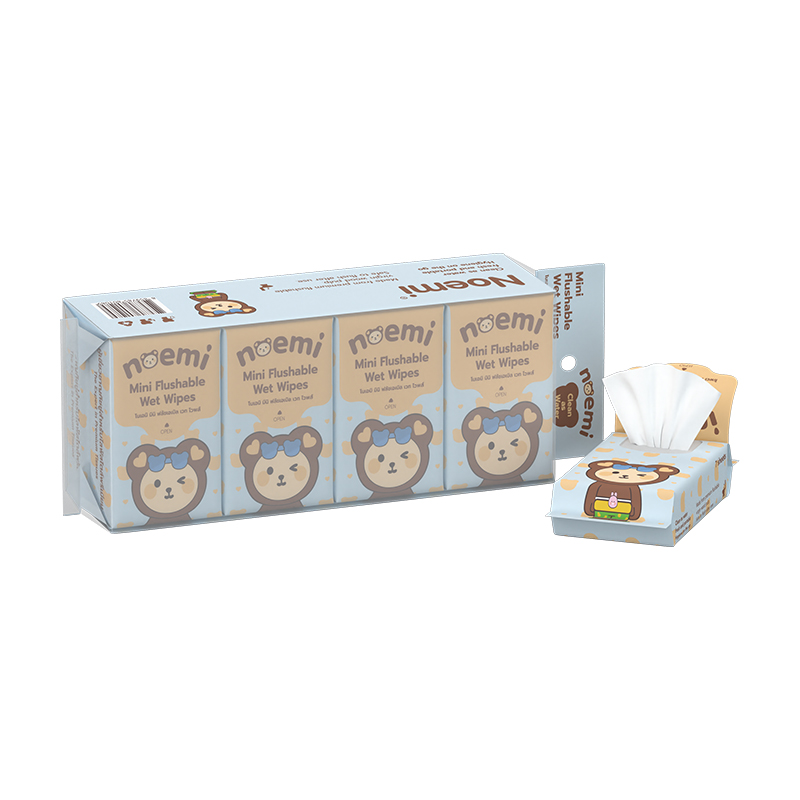
Having answered “are wet wipes allowed on airplanes” affirmatively, the next step is packing them the right way. The goal is to keep wipes fresh, prevent them from drying out, and avoid the frustration of a burst packet inside your flight bag. The following packing methods work across all airlines globally.
By using these methods, you will never have to wonder “can i take wipes on a plane” again, because the wipes will be secure, accessible, and within all carrier guidelines.
Bringing wet wipes on a plane is not simply a matter of permission; it is a quality-of-life decision backed by behavioral studies on passenger comfort. A 2023 survey of 1,200 frequent flyers found that 74% consider personal hygiene wipes essential for long-haul flights. The reasons go beyond surface cleaning and touch the core travel experience.
First, airplane cabin humidity often drops below 20%, drying skin and nasal passages. A moisturizing facial wipe gives immediate relief that no cabin air system can. Second, tray tables have been shown to carry 8 times more bacteria per square inch than a public lavatory flush button, according to a study by Auburn University in 2022. A disinfectant wipe used before eating substantially reduces the transmission risk of common cold viruses. Third, parents traveling with infants rely on baby wipes for diaper changes, sticky hands, and quick cleanups of seat messes. The simple act of having a wipe within reach turns a stressful situation into a manageable one.
Since the global pandemic, the habit of carrying disinfecting wet wipes on a plane has been normalized. Airlines such as Delta, Lufthansa, and Qantas now routinely distribute sanitizing wipes at boarding, but they are often limited to one per passenger. Bringing your own pack ensures you can wipe the touchscreen entertainment system, armrest, and window blind latch at your own pace. A small pack of alcohol-free benzalkonium chloride wipes is preferred because it will not irritate skin and meets the chemical restrictions of most carriers. If you pack alcohol-based wipes, choose a travel pack marked with a 70% isopropyl alcohol concentration or below. Higher concentrations can be flagged as flammable under hazardous material rules, which answers the question “are wet wipes allowed on airplanes” with a note of caution for specific formulations.
The answer to “can i take wipes on a plane” is consistent worldwide, but subtle variations exist. The European Union Aviation Safety Agency aligns with the same solid-liquid classification as the TSA, so flying from Amsterdam to Singapore with wet wipes in hand luggage goes smoothly. However, Australia’s Department of Home Affairs sometimes asks passengers to declare commercial quantities of goods, and a full unopened carton of 24 wipe packs could raise questions about intended use. In India, security officers may ask you to open a large pack of wet wipes for a visual check, particularly on domestic flights. For seamless travel, follow this rule of thumb: carry a maximum of two travel packs in your personal item, and place any bulk backup in checked luggage.
A responsible approach to bringing wet wipes on a plane includes understanding disposal. Most aircraft lavatories are not designed to handle wipes, even those labeled flushable. A single wipe can clog the vacuum waste system, causing a lavatory failure that may ground the aircraft for maintenance. On a Boeing 737, a lavatory out-of-service incident due to a blocked macerator costs an average of USD 1,200 in delays and repairs. Always dispose of wet wipes in the dedicated waste bin provided in the lavatory, not in the toilet. Consider bringing biodegradable plant-fiber wipes if you are environmentally conscious, but treat them the same way after use: bin, not bowl.
Occasionally, a security officer may pull your bag after X-ray inspection because the dense stack of wipes appears as an organic mass on the screen. When this happens, simply open the bag and allow the officer to inspect the pack. Calmly stating, “Those are wet wipes,” is usually sufficient. In nearly all cases, the officer will clear them without further action. If you are asked to discard them, a situation that occurs in fewer than 1 in 10,000 screenings based on TSA voluntary data, comply politely and replace them at a pharmacy after passing through security. This rare event should not discourage you from packing wipes, as the convenience far outweighs the negligible risk.
To make the most of wet wipes on a plane, integrate them into a small, organized comfort pouch. A smart kit includes:
This kit removes any ambiguity about “are wet wipes allowed on airplanes” and transforms them into a practical tool. With a total weight under 200 grams, it adds no noticeable burden to your under-seat bag and pays dividends in comfort, especially on red-eye flights or itineraries crossing multiple time zones.



 English
 日本語
日本語 русский
 Español
 عربى
عربى