
Our team is proud to offer on time guarantee and product guarantee to customer satisfaction.
Read More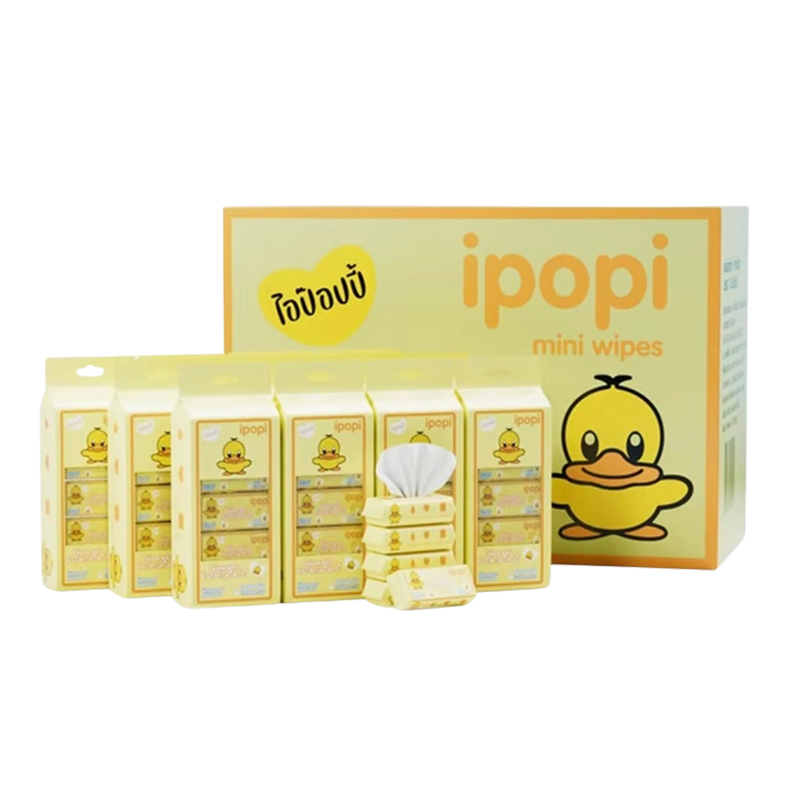
Every day you dry your face on a towel that has been damp for hours, sharing whatever bacteria the last user left behind. Public health researchers ...
View MoreWhen a buyer opens a quotation for baby wipes, the first line usually says "pure water wipes, 80 sheets, 150 x 200 mm." The line says nothing about ...
View MoreAre Wet Wipes Better Than Toilet Paper? The Direct Answer For cleaning effectiveness alone, wet wipes are generally better than dry toilet paper. Moi...
View MoreCan You Bring Wet Wipes on a Plane? The Straight Answer Yes, you can bring wet wipes on a plane in both your carry-on bag and checked luggage. The Tr...
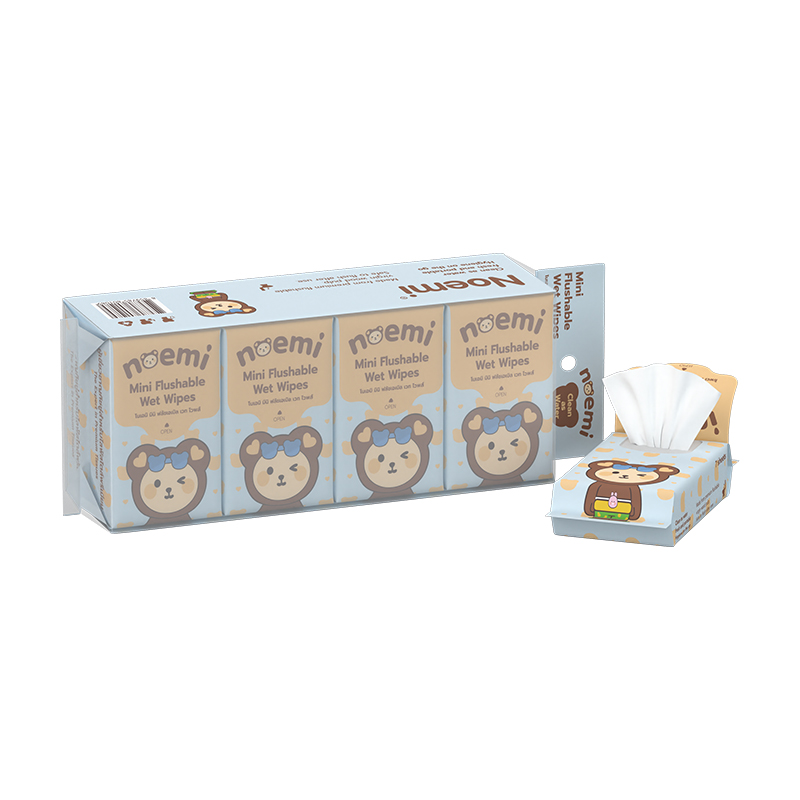
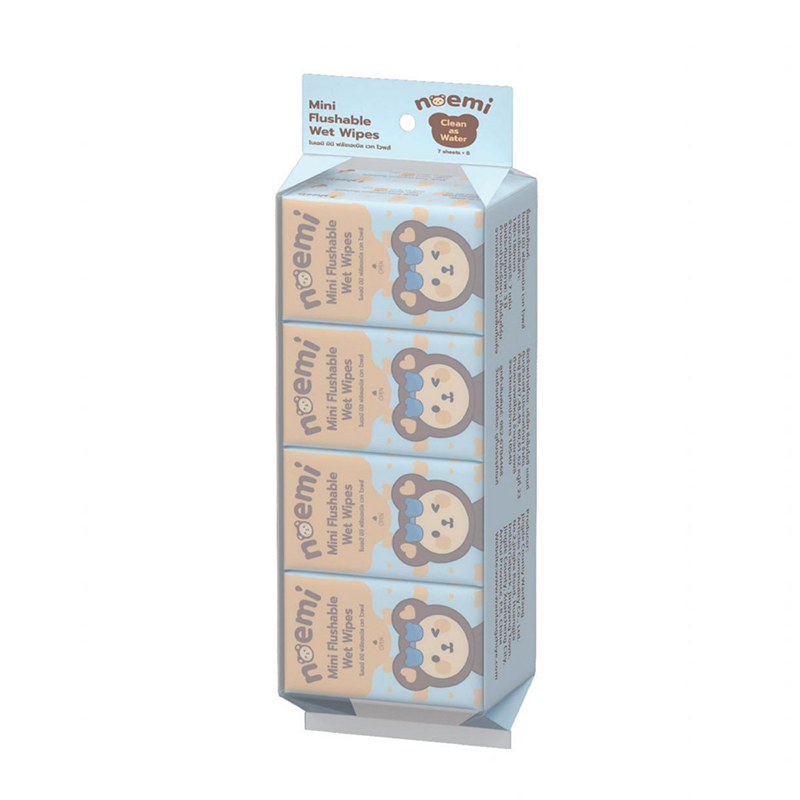
View MoreSmall wet wipes occupy a distinct functional niche within the broader wipe category. Where large-format wipes are designed for full-coverage personal hygiene and surface cleaning, and medium wipes serve general household daily use, the small format is engineered around portability, targeted application, and single-occasion convenience. Sheet dimensions in this tier typically run from 130×175mm down to 140×180mm — small enough to be carried in a pocket or tucked into a diaper bag, but large enough to complete a focused wiping task without requiring multiple sheets.
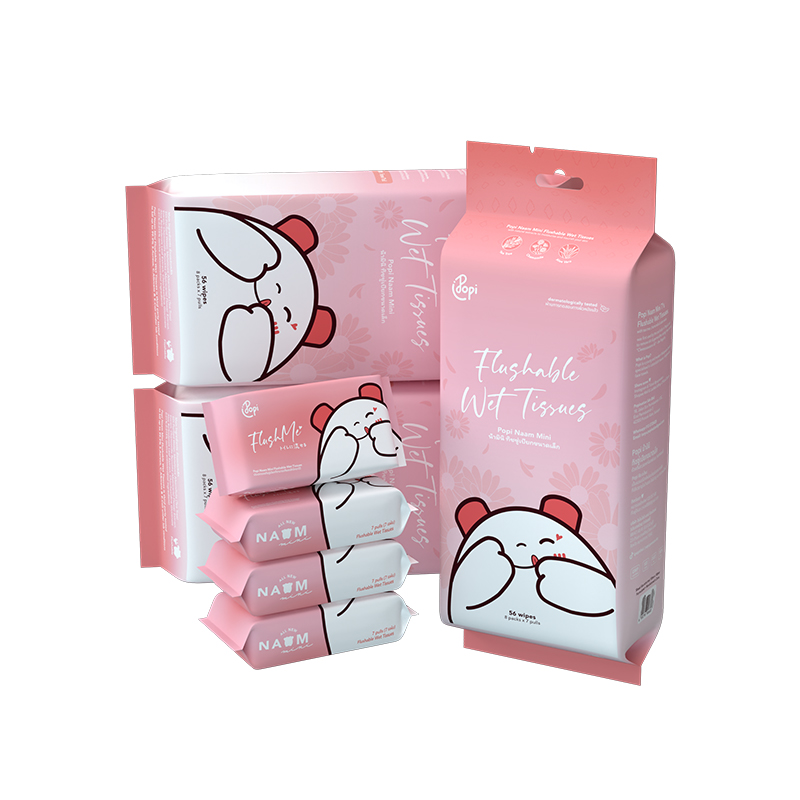
The primary use cases for small wet wipes align closely with this portability profile. Flushable toilet wipes — one of the most commercially significant subcategories in the small format — are used as a complement or alternative to dry toilet paper for personal hygiene. Mini wipe packs for hand cleaning, facial refreshing, and on-the-go personal care are the other dominant applications. In both cases, the consumer is not at a fixed location with easy access to a larger pack — the small format exists precisely because it goes where larger formats cannot.
For retail buyers, the Small Wet Wipe format offers two distinct commercial opportunities. The first is impulse and convenience channel placement — checkout lanes, travel retail, vending, and pharmacy impulse bays — where the compact pack size and low unit price support spontaneous purchase. The second is subscription and replenishment retail, where consumers who use flushable toilet wipes daily build predictable, high-frequency reorder behavior. Jingde County Wanfang Articles Commodity Co., Ltd. produces small-format wipes across both dissolvable and standard nonwoven substrates, supporting buyers who want to address both segments from a single supplier relationship.
The most consequential specification decision in small wet wipe sourcing is whether the product uses a dissolvable substrate or a conventional nonwoven. This choice affects not only the product's end-of-life disposal behavior but also its physical performance during use, its production cost, and the regulatory claims available on packaging.
Dissolvable wood pulp is the substrate used in flushable small wipes. The fiber structure of wood pulp breaks apart when agitated in water, dispersing within the timeframe required by flushability standards such as the INDA/EDANA Fine to Flush guidelines. This makes the product genuinely safe to flush in properly functioning sewer systems — a claim that requires test data confirmation, not just substrate selection. The practical tradeoff is reduced wet tensile strength: a wood pulp sheet at 70gsm is more fragile under friction than a nonwoven at equivalent weight, which is acceptable for gentle personal hygiene use but limits the substrate's applicability to more demanding cleaning tasks.
Conventional nonwoven substrates — typically 10% viscose / 90% polyester or 100% polyester blends in small-format wipes — deliver higher durability and more consistent lotion retention but are not suitable for flushing. These substrates are used in small personal care wipes, hand-cleaning minis, and pure water formats for sensitive skin. The high polyester content in small-format nonwovens reflects the size constraint: a smaller sheet needs proportionally more structural strength per unit area to withstand handling without tearing, making higher polyester ratios more appropriate than in larger formats where the sheet has more inherent structural stability.
For buyers developing a range that includes both flushable and non-flushable SKUs, maintaining clear visual differentiation in packaging between the two substrate types is important — consumer confusion about flushability is one of the primary contributors to inappropriate disposal of non-flushable wipes, which carries reputational risk for brands in markets with active wastewater management campaigns.
Small wet wipe packs are commercially configured in a tighter sheet count range than medium or large formats — typically 7 to 20 sheets per pack — and this constraint shapes the economics of the product more significantly than buyers sometimes anticipate.
At 7 sheets per pack, individual pack weights run between 41g and 55g depending on substrate gsm and lotion loading. This compact weight enables very high carton counts per 40HQ container: a 7-sheet dissolvable wipe pack configured at 1×8×20 per carton can load upward of 4,200 cartons per container, while a 7-sheet pack in a smaller carton configuration (1×30×8) reaches approximately 2,350 cartons. The difference in carton configuration reflects a tradeoff between retail display convenience (smaller inner pack counts suit shelf replenishment) and freight efficiency (larger inner pack counts improve container utilization). Buyers should model both configurations against their specific distribution channel before finalizing the spec.
At 20 sheets per pack, individual pack weights increase to around 113g, and carton counts drop accordingly — typically to 5,000–5,500 cartons per 40HQ container depending on carton dimensions. The 20-sheet format sits at the upper boundary of what most consumers consider a "small" wipe pack; beyond this count, the product starts to compete directly with the medium format on both shelf footprint and retail price point.
For buyers with multi-market distribution — exporting to the United States, Australia, New Zealand, and Southeast Asian markets simultaneously — small differences in carton configuration can translate into meaningful landed cost variation per unit across different freight lane lengths. Running a simple landed cost model across two or three carton configurations before committing to a specification is a low-effort step that often surfaces non-obvious savings.
Small wet wipes — particularly those used for personal hygiene and infant care — are subject to the same regulatory frameworks as larger personal care wipes, despite their compact format. The product's intended use, not its size, determines the applicable registration and labeling requirements in each destination market.
In the European Union, personal care wipes are regulated as cosmetic products under EC No 1223/2009, requiring a Cosmetic Product Safety Report, Responsible Person designation, and CPNP notification before market entry. In the United States, wipes that make only cosmetic claims fall under FDA cosmetic labeling rules; those that make antimicrobial or drug claims require more extensive substantiation. In Australia and New Zealand, the ACCC monitors flushability claims actively, and products making "flushable" assertions without test data compliance have faced enforcement action. For buyers exporting small flushable wipes to these markets, substrate dispersibility documentation is not optional.
At the factory level, production environment quality affects small-format wipes as much as larger ones — and the smaller sheet size means the converting process involves more handling cycles per unit of substrate, increasing the number of contamination exposure points during production. A 100,000-level clean workshop standard, as maintained by Wanfang Paper's Chinese manufacturing operations, provides a controlled environment that is particularly relevant for small wipes positioned for infant or sensitive-skin use.
For buyers building a small-format wipe range for multi-market export, partnering with a factory that has documented experience supplying markets like the United States, Australia, Vietnam, Malaysia, and Paraguay reduces the compliance discovery burden significantly. The Small Wet Wipe category rewards suppliers who can navigate both the technical specifications and the export documentation requirements that vary across these destinations — and that combination of manufacturing capability and export experience is the most reliable basis for a sustainable sourcing relationship.



 English
 日本語
日本語 русский
 Español
 عربى
عربى

