
Our team is proud to offer on time guarantee and product guarantee to customer satisfaction.
Read MoreContent
Not all wet wipes are created equal — and size is one of the most consequential variables buyers overlook. Whether you're stocking a hospital ward, a restaurant kitchen, or a personal care kit, selecting between large, medium, and small wet wipes directly affects cleaning efficiency, product waste, and cost per use. A wipe that is too small for the task forces double or triple applications; one that is oversized for a quick hand clean wastes saturant and increases unit costs.
The wet wipe market has expanded substantially in recent years. Industry analysts valued the global wet wipes market at approximately USD 25 billion in 2023, with personal hygiene and industrial cleaning segments driving the bulk of volume growth. Within this landscape, size differentiation has become a key product design lever — allowing manufacturers and buyers to match wipe dimensions precisely to application requirements.
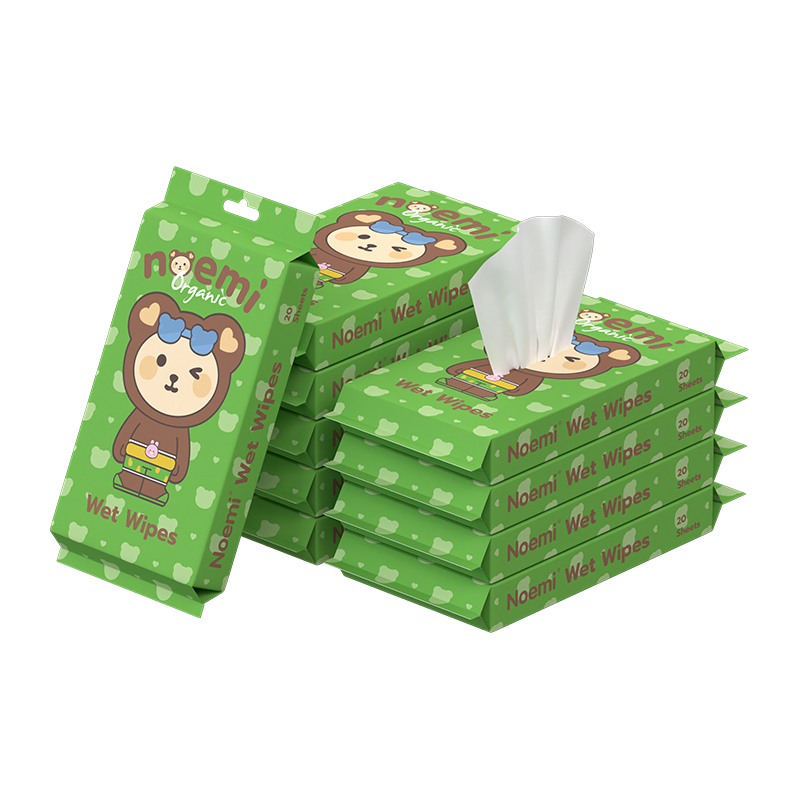
While there is no universal regulatory standard for wet wipe dimensions, the industry has converged on a practical size classification that most manufacturers and buyers recognize:
| Category | Typical Dimensions | Common Applications |
|---|---|---|
| Small Wet Wipe | 10 × 15 cm or smaller | Hand hygiene, facial cleansing, travel packs, single-use hospitality |
| Medium Wet Wipe | 15 × 20 cm – 20 × 25 cm | Baby care, general surface wiping, food service cleanup, gym equipment |
| Large Wet Wipe | 25 × 30 cm and above | Industrial equipment cleaning, patient bed baths, floor and large surface wiping |
These ranges should be treated as guidelines. Buyers procuring for specialized applications — such as cleanroom environments or medical-grade patient care — should always confirm exact sheet dimensions with the supplier before placing bulk orders.
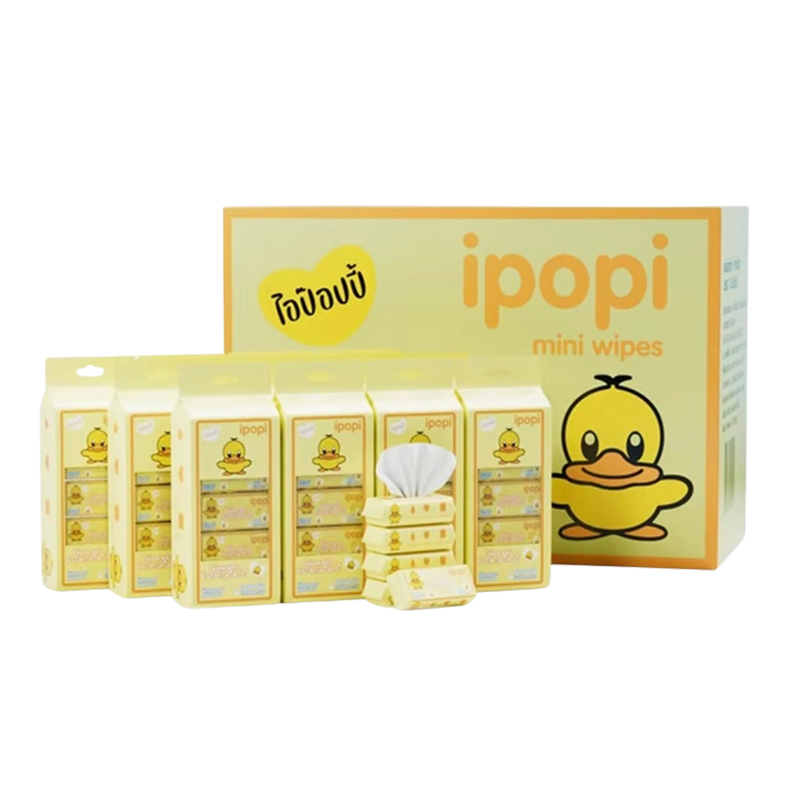
Small wet wipes typically measure 10 × 15 cm or less and are engineered for precision tasks where a compact footprint is an asset rather than a limitation. Their primary strength is portability — individually wrapped small wipes are standard in airline amenity kits, restaurant finger-bowl services, and travel hygiene pouches precisely because they pack efficiently without adding bulk.
From a formulation standpoint, small wipes often carry a higher saturation ratio relative to sheet size — meaning the cleaning or moisturizing solution is concentrated per unit area. This makes them particularly effective for:
The trade-off is coverage area. For tasks that involve wiping down a surface larger than a hand or face, small wipes demand multiple sheets, which can erode cost-efficiency quickly in high-volume institutional settings.
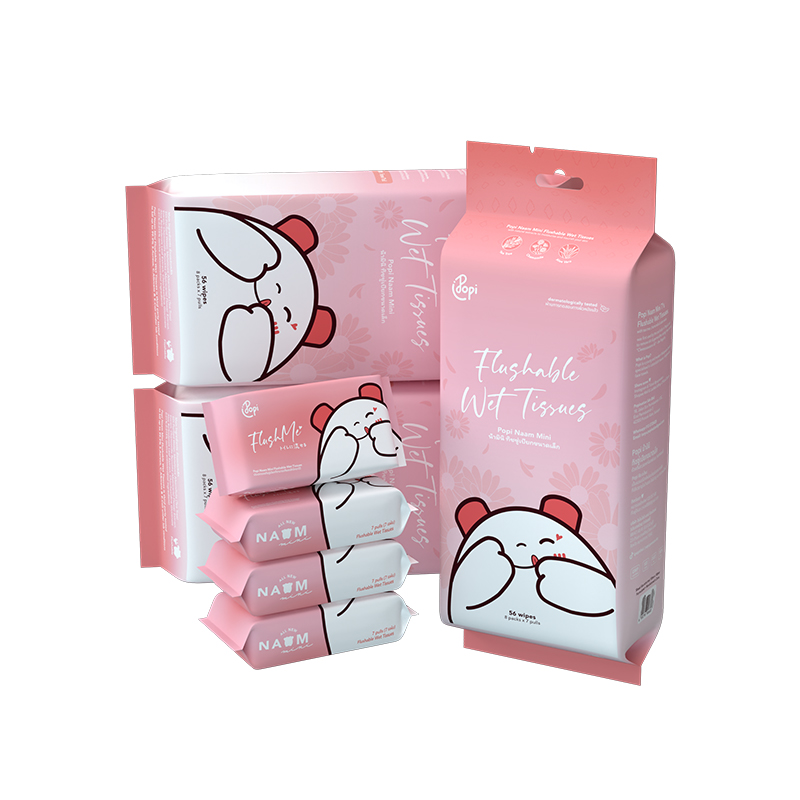
Medium wet wipes occupy the sweet spot for the broadest range of everyday applications. At 15–25 cm in either dimension, they cover enough surface area to handle baby diaper changes, gym equipment wipe-downs, and general household surface cleaning in a single pass — while remaining compact enough for consumer-facing packaging formats like resealable pouches and flip-top canisters.
This size category dominates retail shelves globally and accounts for the largest share of consumer wet wipe volumes. Baby wipes — arguably the most widely recognized wet wipe format — almost universally fall within the medium classification, typically at around 20 × 20 cm. The dimensions allow a caregiver to fold the wipe for multi-surface use during a single diaper change, reducing per-use product consumption.
For food service operators, medium wet wipes are the standard choice for table sanitization between covers, equipment surface wipe-downs, and staff hand hygiene during service. Their balance of size and cost makes per-unit economics favorable for operations going through hundreds of wipes per shift.
Large wet wipes — generally 25 × 30 cm and above — are purpose-built for scenarios where coverage speed and thoroughness matter more than portability. They are the dominant format in healthcare, industrial maintenance, and facilities management for several practical reasons:
Large wipes typically use a heavier substrate — often 60–100 gsm nonwoven fabric — to prevent tearing under mechanical pressure during scrubbing tasks. This adds to the per-unit cost, but the reduction in labor time and wipe count required per task generally offsets the premium in professional settings.
Selecting the right size is a function of your specific application, volume requirements, and total cost-of-use calculation. Consider these factors before finalizing a specification:
Match the wipe to the surface being cleaned. A small wipe used for a large task multiplies your wipe count — and your cost. A large wipe used only for hand hygiene wastes saturant on unused sheet area. Measure the typical surface area you're addressing and choose a wipe that covers it in one to two passes.
Larger wipes often require a heavier nonwoven substrate to maintain structural integrity during use. If your application involves scrubbing or mechanical pressure, confirm that the wipe's gsm (grams per square meter) rating is appropriate — a lightweight substrate on a large-format wipe will tear and leave fiber residue.
Large wipes in canister or bucket formats dispense one sheet at a time with minimal contact, which is important for infection control environments. Small and medium wipes in flow-wrap or resealable pouches suit mobile or personal-use contexts. Ensure your chosen size is available in a packaging format that fits your operational workflow.
Healthcare and food processing environments may have compliance specifications that dictate minimum wipe dimensions for certain cleaning procedures. Always cross-reference your procurement spec against applicable standards — such as EN 16615 for disinfectant wipes or relevant FDA guidance for medical-grade products — before locking in a size.
Price per pack is a misleading metric when comparing wet wipe sizes. The more meaningful figure is cost per completed cleaning task. A large wet wipe priced at $0.30 per sheet that cleans a surface in one pass is cheaper in practice than a small wipe at $0.08 per sheet that requires five sheets to cover the same area ($0.40 total).
To calculate cost-per-use accurately:
This methodology consistently shows that right-sizing wipes to the task — rather than defaulting to the cheapest per-unit option — delivers better total cost outcomes over a procurement cycle.



 English
 日本語
日本語 русский
 Español
 عربى
عربى