
Our team is proud to offer on time guarantee and product guarantee to customer satisfaction.
Read MoreContent
Wet wipes are generally categorized by the substrate material and the intended use, and both factors affect what packaging and formulation choices make sense. By substrate, the most common types are nonwoven spunlace fabric (a blend of fibers bonded without weaving, offering good strength and softness), cotton-based wipes, and biodegradable substrates made from materials like viscose or bamboo fiber blends designed to break down faster than conventional synthetics.
By use case, the category splits into baby wipes (formulated for sensitive skin, typically fragrance-free or hypoallergenic), personal care and cosmetic wipes (makeup removal, facial cleansing), household cleaning wipes (often infused with surfactants or disinfectants), antibacterial and disinfecting wipes (regulated more heavily due to their claimed antimicrobial function), and industrial or automotive wipes built for heavier-duty solvent resistance rather than skin contact.
This distinction matters for packaging decisions covered later in this article — a disinfecting wipe with a strong solvent-based solution needs a different barrier packaging film than a water-based baby wipe, since the wrong film can degrade or allow the solution to evaporate prematurely.
Wet wipe regulation varies significantly by product category and region, and manufacturers generally need to track requirements across several different regulatory angles rather than a single unified standard. Cosmetic and personal care wipes typically fall under regional cosmetics regulations (such as the EU Cosmetics Regulation or FDA cosmetic labeling rules in the US), governing ingredient disclosure, preservative limits, and claims made on packaging.
Disinfecting wipes face additional scrutiny because antimicrobial claims typically require registration as a pesticide or biocidal product in many jurisdictions — the EPA in the US and equivalent biocide regulations in the EU both require efficacy testing and registration before a wipe can legally claim to kill a specific percentage of germs or bacteria on a label.
A more recent and increasingly significant regulatory area concerns flushability claims and plastic content. Several jurisdictions — the UK and parts of the EU among them — have moved toward restricting or banning "flushable" labeling on wipes containing plastic fibers, and some regions have introduced outright bans on plastic-containing wet wipes altogether, which has been a major driver behind the push toward plastic-free and biodegradable substrates across the industry.
The single most important disposal guideline for the overwhelming majority of wet wipes is straightforward: they should go in household trash, not down the toilet, even when a package is labeled "flushable." Most wet wipe substrates — including many marketed as flushable — don't break down in wastewater systems the way toilet paper does, and they're a leading contributor to sewer blockages and the large fatberg formations that municipal water utilities regularly report clearing from pipe networks.
For wipes genuinely engineered and independently certified as flushable (look for recognized dispersibility standards rather than taking a package claim at face value), disposal in the toilet in small quantities is generally acceptable, but even certified-flushable wipes are best used sparingly rather than routinely, since real-world wastewater conditions don't always match controlled lab testing conditions.
Where local recycling programs accept them, packaging (rather than the wipes themselves) is the more realistic recycling opportunity — mono-material flexible packaging designed for recyclability, discussed further below, can often go into soft plastic or film recycling streams where the wipes themselves generally cannot due to contamination from cleaning solutions or the mixed-fiber nature of most wipe substrates.
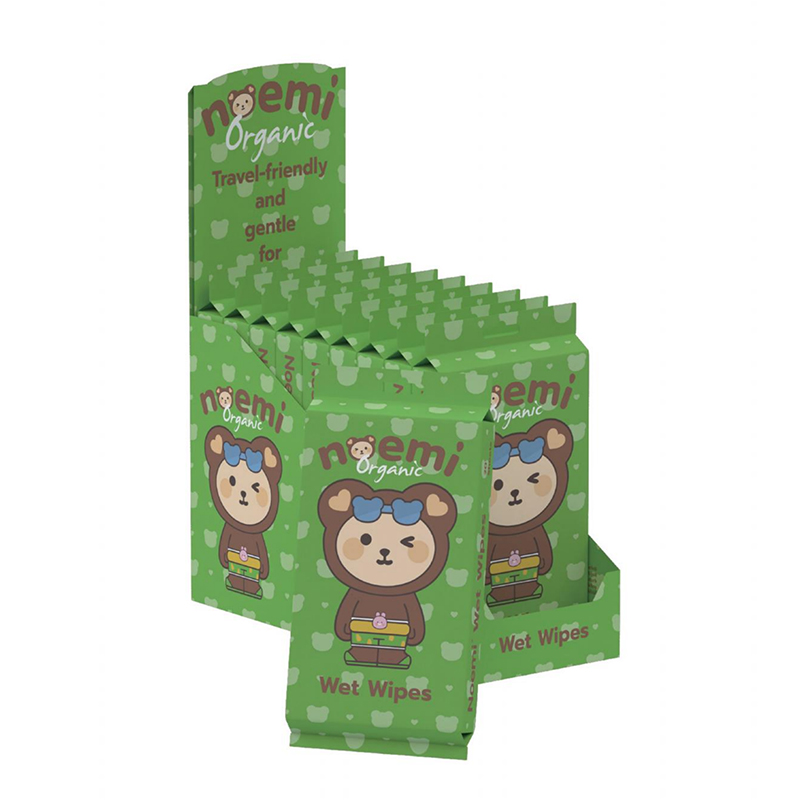
Wet wipes carry environmental impact at multiple stages of their lifecycle, and the wipe substrate itself is often the most scrutinized. Conventional nonwoven wipes made with polyester or polypropylene fibers don't biodegrade in any practical timeframe once they reach soil, waterways, or landfill, and they're a well-documented contributor to microplastic pollution as they physically break down into smaller fragments without chemically degrading.
Improper disposal compounds this impact directly — wipes flushed rather than binned contribute to sewer blockages, combined sewer overflow events, and the buildup of large wipe-and-fat masses in municipal wastewater infrastructure, which utilities then have to spend significant resources removing.
Packaging adds a second layer of impact, separate from the wipe substrate itself. Traditional multi-layer laminate packaging (commonly combining different plastic types for barrier performance) is difficult to recycle in standard municipal systems precisely because mixed materials can't be effectively separated for recycling, which is a major reason the packaging side of the industry has shifted focus toward mono-material and more readily recyclable formats, covered in the sections below.
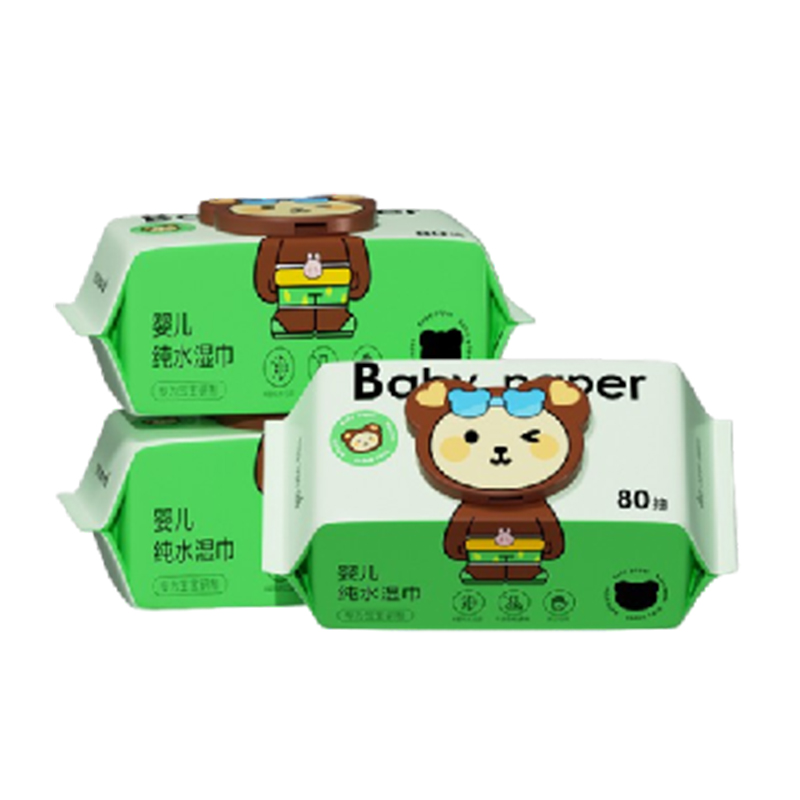
Wet wipes packaging solutions need to solve a specific technical problem that dry product packaging doesn't face: keeping the wipes moist and the cleaning solution stable over the product's full shelf life while still allowing repeated, easy access. This is why wet wipe packaging almost universally relies on some form of resealable closure — a peel-and-reseal label or a molded plastic flip-top lid — rather than a simple open bag format.
Beyond moisture retention, packaging also needs to manage dispensing mechanics. Interfolded wipe stacks are designed so that pulling one wipe out draws the next wipe partially through the dispensing opening, a small mechanical design detail that significantly affects perceived product quality even though it has nothing to do with the wipe formulation itself.
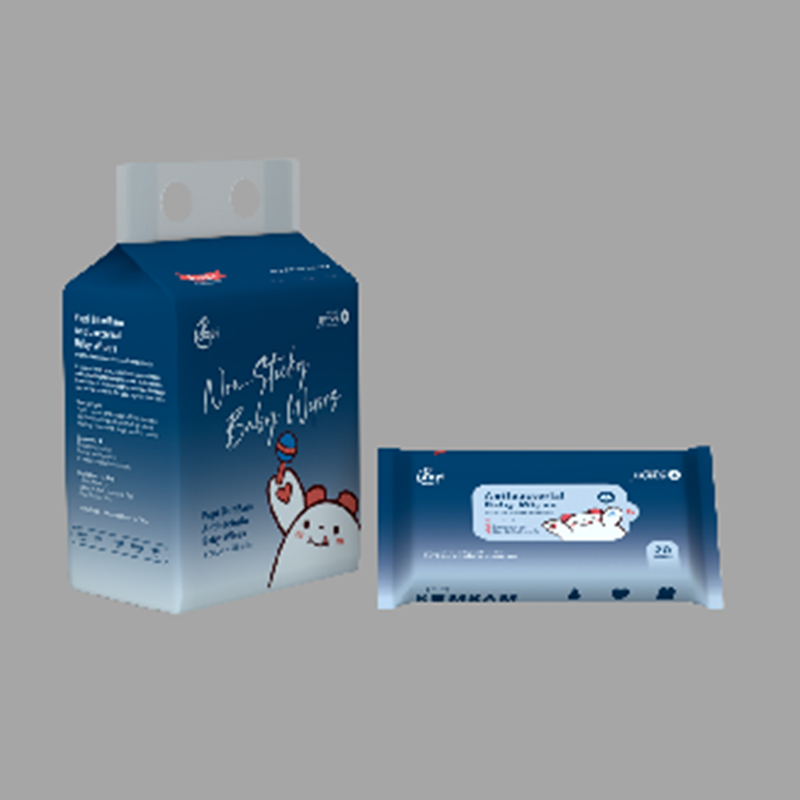
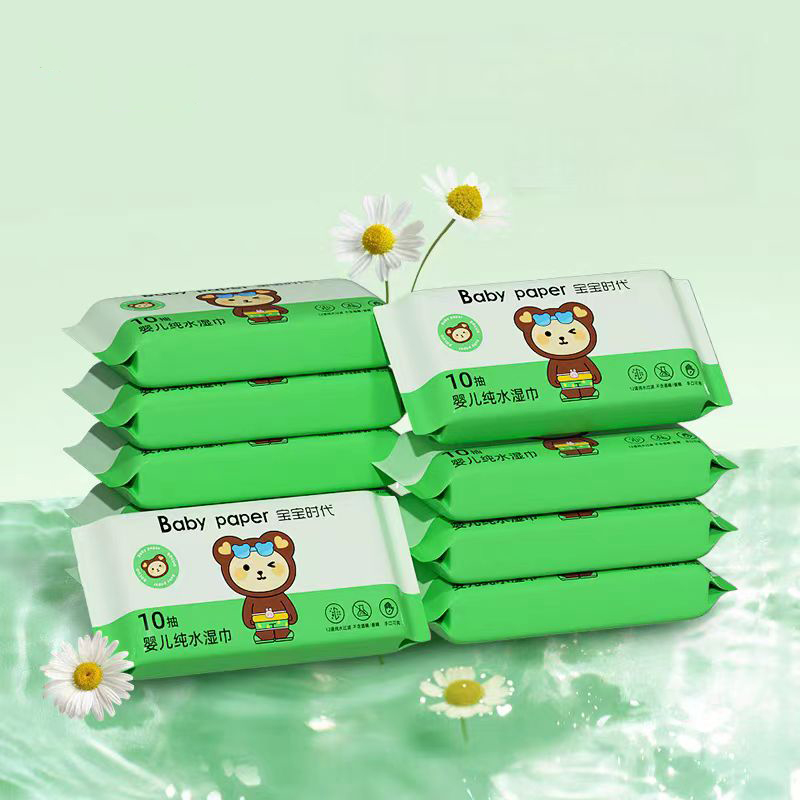
Flexible packaging for wet wipes — pouches and soft packs rather than rigid tubs — dominates the category because it uses significantly less material per unit than rigid packaging while still providing an adequate moisture barrier, which keeps both material cost and shipping weight down across large production volumes.
These formats typically use a laminated film structure combining several thin layers, each contributing a specific property: an outer layer for print quality and puncture resistance, a middle barrier layer (often a metallized or EVOH layer) to block moisture vapor transmission, and an inner sealant layer that allows the pouch to be heat-sealed shut. Rigid plastic tubs remain common for larger household or bulk formats where repeated one-handed access and a sturdier resealable lid matter more than minimizing material use.
The specific wet wipes packaging materials chosen depend heavily on the barrier performance needed for the wipe formulation inside:
| Material | Role in the Packaging |
|---|---|
| Polyethylene (PE) | Common sealant and structural layer; flexible and heat-sealable |
| Polypropylene (PP) | Used for rigid lids and flip-top closures; good moisture resistance |
| Metallized film | High moisture-barrier middle layer in traditional multi-layer laminates |
| EVOH | Higher-performance barrier layer, often used where longer shelf stability is required |
Traditional multi-layer laminate packaging combines several different plastic types bonded together for barrier performance, but this mixed-material construction is exactly what makes it difficult to recycle through standard municipal systems — recycling facilities generally can't separate bonded layers of different plastic types, so the whole laminate typically gets rejected from recycling streams regardless of what any individual layer is made from.
Mono material wet wipes packaging addresses this directly by constructing the entire pouch — barrier layer, structural layer, and sealant layer included — from a single polymer family, typically all-PE or all-PP, rather than combining different plastic types. Because every layer is chemically compatible, the finished pouch can be processed through existing single-polymer recycling streams rather than being excluded as unrecyclable mixed material.
Recyclable wet wipes packaging built this way generally has to compromise slightly on ultimate barrier performance compared to a laminate using a dedicated high-barrier layer like EVOH or metallized film, since mono-material structures achieve their barrier properties through different film engineering (such as multiple co-extruded PE layers with varying densities) rather than combining fundamentally different materials. For most wipe formulations this trade-off is manageable, though very high-barrier applications — long shelf-life industrial or solvent-based wipes, for instance — may still require a traditional laminate structure where recyclability is harder to achieve.
Sustainable packaging solutions for wet wipes extend beyond recyclability alone to cover the broader environmental footprint of the packaging across its full lifecycle. Material reduction — thinning film gauge without compromising barrier integrity — cuts both raw material use and shipping weight, which lowers the transport-related carbon footprint per unit shipped in addition to the direct material savings.
Post-consumer recycled (PCR) content is another lever brands increasingly use, incorporating a percentage of reclaimed plastic into the packaging film rather than relying entirely on virgin polymer, though PCR content needs to be balanced carefully against barrier performance requirements since recycled resin can behave slightly differently in film extrusion than virgin material.
Some manufacturers are also exploring compostable film structures made from plant-based polymers as an alternative to conventional plastic packaging altogether, though these materials generally require industrial composting conditions to break down properly and aren't yet widely compatible with standard curbside recycling or composting infrastructure, which limits their practical environmental benefit until composting access becomes more widespread. For most brands today, mono-material recyclable packaging paired with reduced film gauge represents the more immediately actionable sustainability improvement, with compostable alternatives remaining a longer-term direction as infrastructure catches up.



 English
 日本語
日本語 русский
 Español
 عربى
عربى