
Our team is proud to offer on time guarantee and product guarantee to customer satisfaction.
Read MoreSqueeze a sheet of bathroom tissue between two fingers and you are holding a paper that weighs 12 to 20 grams per square meter, roughly one fifth the weight of a sheet of office copy paper.
Tissue paper is a low basis weight paper made from virgin or recycled pulp and creped while it dries, which is what gives it stretch, bulk and the softness people notice before they notice anything else.
The same label covers bathroom tissue, facial tissue, kitchen towels, napkins and the thin dyed sheets sold for gift wrapping. That overlap is why the phrase causes so much confusion on a purchase order, where a five gram difference in basis weight changes both the invoice and the way the product behaves in a customer's hand.
Content
Tissue paper is a lightweight creped paper of roughly 12 to 30 grams per square meter, made from virgin wood pulp, bamboo or recovered fiber, and engineered for softness, absorbency and single use hygiene rather than for writing, printing or structural strength.
Definition: tissue paper is paper below about 30 gsm that is creped off a Yankee dryer, a step that builds 15 to 30 percent stretch, high caliper and fast water uptake into the sheet. Fiber sheets above that weight are classed as packaging paper or board, and nonwoven wipes are not paper at all.
A typical furnish blends 60 to 70 percent hardwood, usually eucalyptus, for softness with 30 to 40 percent softwood for strength. The sheet is pressed, dried on a heated Yankee cylinder and scraped off by a creping doctor blade whose angle controls bulk and feel. Crescent former machines make the standard product, through air dried machines add bulk by skipping the press nip, and hybrid processes sit between the two.
Gift tissue belongs to the family in weight and thickness, but it is built to hold a crease and release color rather than to absorb water, so it carries no wet strength resin and no absorbency specification. Nonwoven wipes look closer still and behave nothing like paper: they are spunlace or airlaid nonwovens bonded by water jets or binders, with no fiber network formed from a pulp slurry.
Commercial trade uses one label for five grades that are never interchangeable on a converting line or a retail shelf.
| Grade | Basis weight | Typical ply | Common furnish | Primary job |
| Bath tissue | 12 to 20 gsm | 2 to 3 | Recycled or virgin | Flushability with controlled wet strength |
| Facial tissue | 13 to 18 gsm | 2 to 4 | Virgin hardwood and softwood | Softness and lint free wiping |
| Kitchen towel | 20 to 30 gsm | 2 | Virgin or high grade recycled | Absorbency and wet tensile strength |
| Napkin and hand towel | 18 to 25 gsm | 1 to 2 | Virgin or recycled | Fold retention and food contact safety |
| Gift tissue | 17 to 25 gsm | 1 | Recycled, dyed | Color and crease, no absorbency needed |
The most expensive sourcing error is treating gift tissue as a cheaper facial tissue. Gift tissue at 20 gsm has no wet strength and often carries dye that migrates when damp, so it fails every functional test a napkin or towel has to pass.
Basis weight sets the cost, ply count sets the structure and creping sets the feel. Change one and the other two have to compensate, which is why a sheet cannot be made thinner, softer and stronger at the same time without a machine upgrade.
This chart explains a recurring buyer complaint. Kitchen towels and napkins sit 30 to 60 percent heavier than bath tissue, so a towel that tears like a facial tissue is not a defect. It is a basis weight specified for the wrong job.
Ply count works differently again. Two 8 gsm plies bonded together give more bulk and better wet strength than a single 16 gsm ply, because each layer keeps its own structure. Four ply facial tissue takes that logic further, and a cream or lotion finish adds glycerin so the sheet releases moisture onto skin. That is how a premium facial tissue feels softer than a heavier two ply sheet while using less total fiber.
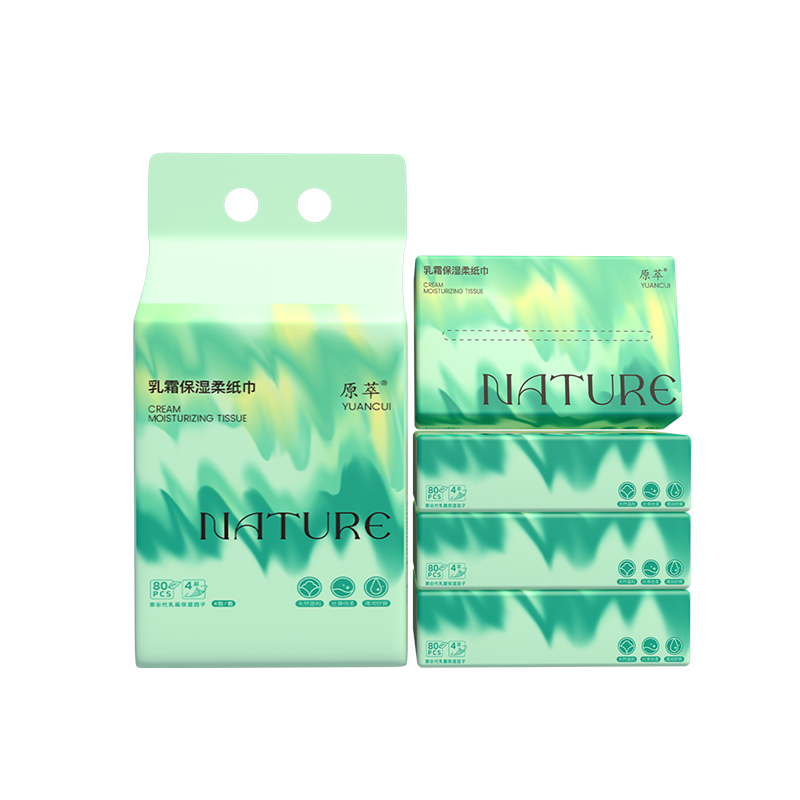 Disposable 80-sheet 4-layer cream moisturizing super soft facial tissueThe disposable 80-sheet 4-layer cream moisturizing super soft facial tissue adopts an advanced four-layer thickened design, which not only enhances the toughness and d...View Product →
Choose virgin pulp when softness, brightness and food contact compliance drive the decision, and choose recycled fiber when cost and environmental reporting do. Both can pass the same hygiene standards; they differ in what they cost and how much refining the sheet needs.
Fiber is the largest single material cost in a tissue product, so the furnish decision moves landed cost further than packaging, pallet configuration or freight. On a full container of bath tissue, a 20 percent furnish saving outweighs every other line on the cost sheet.
Food service buyers usually settle this question with a document rather than a sample. A virgin pulp dinner napkin at 270 by 270 mm passes food contact review without extra paperwork, while a recycled alternative needs the right certificate class before it can sit under a plate.
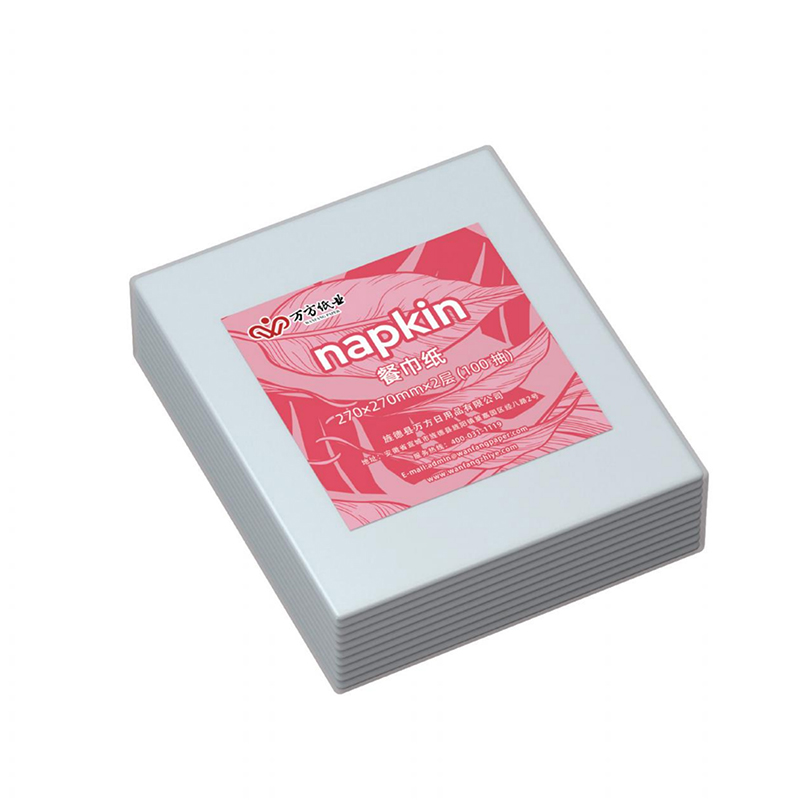 Virgin Pulp Dinner Napkins – 100 Sheets (270×270mm)These 2-ply dinner napkins are made from virgin wood pulp, providing a soft, absorbent surface suitable for dining table use, food service, and hospitality settings. E...View Product →
Six checks catch almost every quality dispute before the container leaves the port.
Private label buyers add a seventh consideration: print and embossing. A supplier that runs its own mills holds artwork registration and embossing depth steady across reorders, which matters more than a small unit price gap once a brand is on the shelf. Working with a manufacturer that publishes its mill and certificate pages openly, such as Wanfang Paper of Jingde County Wanfang Articles Commodity Co., Ltd, shortens the verification step considerably.
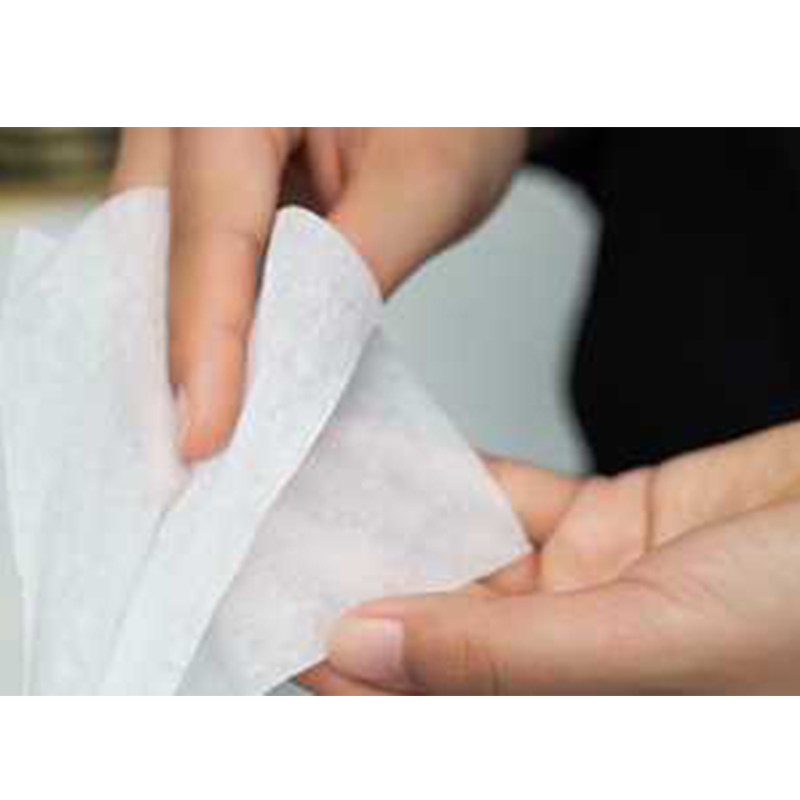 Disposable printable customizable paper box soft facial tissueThe disposable printable and customizable paper box soft facial tissue is not only soft and skin-friendly, gently cares for the skin of you and your family, but also s...View Product →
No. Toilet paper is one grade inside the tissue paper family, along with facial tissue, kitchen towels, napkins and gift tissue. They share a low basis weight and a creping process, but each grade is specified around a different job, and a sheet that passes as toilet paper would fail as a kitchen towel.
Clean, dry tissue paper can go into paper recycling. Gift wrap sheets, unused napkins and unsoiled packaging tissue are accepted in most municipal systems. Used bathroom tissue, kitchen towels and wipes are not, because the fibers are short, contaminated and, in wet strength products, deliberately bonded so they will not break down in a repulper.
Two ply bath tissue and three ply facial tissue cover the bulk of household demand. Four and five ply constructions are reserved for premium facial tissue, where the added bulk has to justify a higher sheet price. A ply count without a basis weight and a caliper range is not a specification.
No. A well creped three ply sheet at high caliper can outperform a four ply sheet built from thin, poorly bonded layers, and wet tensile strength reveals the difference immediately. Judge the finished sheet on caliper, wet strength and absorbency, then treat ply count as a starting point rather than a verdict.
If you keep one number from this guide, keep basis weight. It sets cost, feel and function before any other decision, and every remaining choice in a tissue paper specification is a response to it.



 English
 日本語
日本語 русский
 Español
 عربى
عربى