
Our team is proud to offer on time guarantee and product guarantee to customer satisfaction.
Read MoreContent
The foundation of any baby wipe rests on three essential raw material categories: the substrate (nonwoven fabric), the liquid solution, and packaging materials. These components determine the product's softness, safety, moisture retention, and shelf stability. Premium baby wipes typically allocate 45% of production costs to the substrate, 30% to the liquid formulation, and 25% to packaging and auxiliary materials. Understanding these proportions helps manufacturers balance quality with cost efficiency while meeting stringent safety standards for infant care products.
The global baby wipes market, valued at approximately $4.8 billion in 2024, relies heavily on innovations in raw material sourcing. Manufacturers must navigate complex supply chains while ensuring compliance with regulations such as FDA guidelines in the United States and EU Cosmetic Regulation (EC) No 1223/2009 in Europe. The choice between synthetic and natural materials increasingly influences consumer purchasing decisions, with 68% of parents now preferring wipes marketed as containing plant-based or biodegradable components.
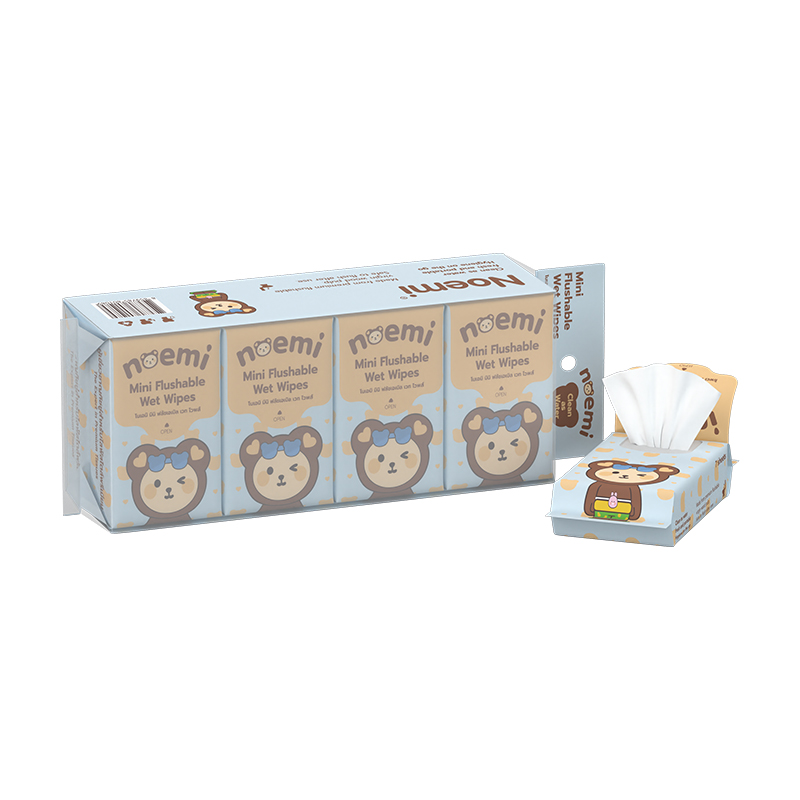
The substrate constitutes the physical body of the baby wipe and directly impacts user experience. Manufacturers predominantly utilize three types of nonwoven materials, each offering distinct performance characteristics and cost profiles.
Spunlace nonwoven fabric dominates the premium baby wipes segment, commanding over 60% of market share in high-quality products. This material undergoes hydroentanglement, where high-pressure water jets entangle fibers to create a soft yet durable structure without chemical binders. Typical fiber compositions include:
Weight specifications typically range from 35 to 60 grams per square meter (gsm), with premium products utilizing 50-60 gsm for enhanced thickness and durability. The manufacturing process consumes approximately 3.5 liters of water per kilogram of fabric, driving sustainability initiatives toward closed-loop water systems.
Thermal bond nonwovens, created by heat-fusing synthetic fibers, offer cost advantages at 15-20% lower material costs than spunlace but sacrifice softness. These appear primarily in budget product lines. Airlaid materials, produced by dispersing fibers in air before bonding, provide superior absorbency for specialized wet wipes but see limited use in standard baby wipes due to higher production costs.
| Material Type | Softness Rating | Cost per kg | Biodegradability | Primary Application |
|---|---|---|---|---|
| Spunlace (Viscose/Polyester) | Excellent | $3.20-$4.50 | Partial | Premium baby wipes |
| Spunlace (Cotton blend) | Superior | $4.80-$6.20 | High | Organic/eco-friendly lines |
| Thermal Bond (Polypropylene) | Moderate | $2.10-$2.80 | Low | Value/budget products |
| Bamboo Fiber Spunlace | Excellent | $5.50-$7.00 | Complete | Sustainable premium segment |
The impregnating solution typically constitutes 85-95% of the total wipe weight, making its composition critical for product performance and safety. This aqueous mixture requires precise formulation to prevent microbial growth while maintaining skin compatibility.
Purified water serves as the primary solvent, with manufacturers implementing multi-stage filtration including reverse osmosis, deionization, and UV sterilization. The water must achieve electrical conductivity below 5 microsiemens per centimeter and total organic carbon under 500 parts per billion. Some premium brands market "water wipes" containing 99.9% purified water with minimal additives, targeting parents concerned about chemical exposure.
Standard formulations incorporate several functional categories, with concentrations carefully controlled to balance efficacy with safety margins:
The shift toward "clean label" ingredients has accelerated reformulation efforts. Parabens, phthalates, and formaldehyde-releasing preservatives have been eliminated by major brands following consumer pressure and regulatory scrutiny in markets like the European Union.
Packaging serves dual functions: maintaining moisture content during storage and providing convenient dispensing. Material selection directly impacts shelf life, which typically ranges from 24 to 36 months under proper conditions.
Laminated film structures dominate the market, combining multiple polymer layers to achieve barrier properties:
Total film thickness ranges from 80 to 120 micrometers, with premium products utilizing aluminum foil laminates for superior moisture retention. The resealable closure system, typically pressure-sensitive adhesive labels or plastic lids, must withstand minimum 100 open-close cycles without significant moisture loss.
Cardboard cases and display boxes provide retail presentation and shipping protection. The industry faces increasing pressure to reduce plastic usage, with recyclable mono-material films and post-consumer recycled content (targeting 30% by 2025) becoming standard commitments among major manufacturers.
Raw material sourcing for baby wipes production requires navigating global supply chains while managing cost volatility and quality consistency. Strategic decisions in supplier selection significantly impact both production economics and regulatory compliance.
Nonwoven fabric production concentrates in Asia, with China, India, and Turkey collectively supplying approximately 70% of global spunlace capacity for wipes applications. Viscose fiber primarily originates from Southeast Asian producers utilizing wood pulp from sustainably managed forests certified by FSC or PEFC schemes. European manufacturers increasingly source substrates from regional suppliers to reduce transportation emissions, accepting 10-15% cost premiums for local production.
Raw material costs fluctuate with petroleum prices (affecting polyester and packaging) and agricultural commodity markets (impacting viscose and cotton). Leading manufacturers implement:
Quality assurance protocols require comprehensive testing of incoming materials, including fiber composition verification, extractable substance analysis, and microbial load testing. Reputable suppliers provide Certificates of Analysis and compliance documentation with regulations including REACH, California Proposition 65, and Biocidal Products Regulation (BPR) where applicable.
The baby wipes industry actively pursues material innovations addressing environmental concerns and performance enhancement. These developments reshape raw material specifications and supplier relationships.
Flushable wipes represent a growing segment, requiring substrates that disintegrate in wastewater systems per INDA/EDANA flushability guidelines. Cellulosic short-fiber nonwovens and wood pulp-based materials achieve 90% biodegradability within 28 days under composting conditions, compared to 2-5 years for traditional polyester blends. However, flushable claims face regulatory scrutiny due to municipal sewer system impacts, with some jurisdictions requiring specific labeling and testing protocols.
Polymer producers now offer bio-based polyethylene derived from sugarcane ethanol and recycled polyester from post-consumer PET bottles. While currently commanding 20-40% price premiums, these materials enable carbon footprint reductions of 30-50% compared to virgin fossil-based alternatives. Major brands have committed to 100% recyclable or compostable packaging by 2030, driving innovation in barrier coatings and adhesive systems compatible with recycling streams.
The convergence of performance requirements, regulatory compliance, and sustainability imperatives continues to elevate the strategic importance of raw material selection in baby wipes manufacturing. Manufacturers who master material science while maintaining supply chain resilience position themselves for competitive advantage in this evolving market.



 English
 日本語
日本語 русский
 Español
 عربى
عربى