
Our team is proud to offer on time guarantee and product guarantee to customer satisfaction.
Read MoreContent
The core difference between disposable face towels and regular towels is not softness or absorbency — it is microbial load at the moment of use. A freshly laundered cotton towel is effectively clean. The problem is that it rarely stays that way. Bath towels in typical household use harbor millions of bacteria within 48 hours of their first post-wash use, according to research published in microbiology journals examining domestic textile contamination. Face towels, used in a warm and humid bathroom environment, accumulate bacteria even faster.
Disposable face towels eliminate that accumulation entirely. Each sheet is used once and discarded, so the surface contacting your skin has never touched anything else. For people with acne-prone, sensitive, or compromised skin barriers, this is a meaningful practical advantage — not a marketing claim.
Regular towels do have real advantages: lower per-use cost over time, no ongoing purchasing, and lower environmental impact when used and laundered properly. The comparison is not one-sided. But for facial skincare specifically — where you are pressing a porous material against freshly cleansed skin — the hygiene argument for disposables is difficult to dismiss.
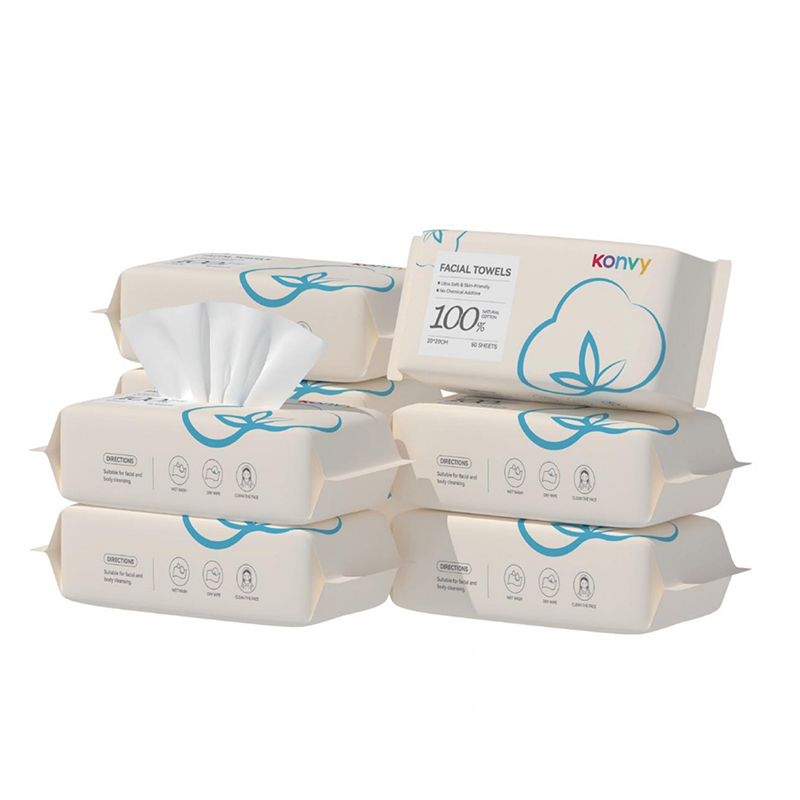
Yes — and the mechanism is well understood. A used face towel accumulates dead skin cells, residual cleanser, sebum, and environmental bacteria with every use. When you press that towel against freshly washed skin, you are reintroducing that material directly onto your face. This is particularly problematic for acne-prone skin, where Cutibacterium acnes (the bacterium most associated with inflammatory acne) thrives in the lipid-rich environment that builds up in textile fibers.
Beyond bacterial transfer, towel friction is a contributing factor. Rough or worn cotton terry cloth creates micro-abrasions in the skin barrier, which allow bacteria and irritants to penetrate more easily. Dermatologists frequently identify towel habits as an overlooked variable when patients experience persistent breakouts despite an otherwise consistent skincare routine.
The compounding factor is that most people do not replace or launder face towels as frequently as hygiene standards recommend. A towel used daily and washed weekly has had seven opportunities to accumulate contamination before it contacts clean skin again.
For acne-prone skin, disposable face towels offer a genuinely cleaner alternative to reusable towels — but they are not a standalone acne treatment. Their benefit is elimination of one specific contamination pathway: the towel itself as a vehicle for bacterial reintroduction after cleansing.
The logic is straightforward. If you cleanse your face to remove excess oil, bacteria, and debris, then dry it with a towel carrying those same materials from a previous use, the cleansing step is partially undone. A single-use towel ensures the drying step does not compromise the cleansing step.
Dermatologists and estheticians increasingly recommend disposable face towels specifically for:
They will not clear acne caused by hormonal fluctuations, diet, or product incompatibility — but as one controllable hygiene variable, they are an easy and relatively inexpensive improvement to a skincare routine.
For reusable face towels, the American Academy of Dermatology and most dermatologists recommend washing after every two to three uses — a significantly shorter cycle than most people follow. Using a face towel for a full week before washing is the norm in many households, but that cadence allows substantial bacterial and fungal buildup in the fiber.
Replacement (not just washing) of cotton face towels should happen every one to two years under regular use. As the fibers break down with washing cycles, they become less absorbent, harbor more bacteria in the degraded fiber structure, and create more surface friction against the skin. A towel that feels rough or has visible pilling has passed its useful life for facial use.
Several factors accelerate replacement timing:
Disposable face towels sidestep the replacement question entirely: each sheet is used once and discarded, so there is no accumulation period and no question of whether it is still clean enough to use.
Yes — single-use face towels are among the most hygienic option available for facial drying. When packaged and stored correctly, each sheet is unused and free of bacteria, residual product, or skin-derived contamination at the moment of use. This is their fundamental hygiene advantage over reusable alternatives.
However, hygienic use depends on packaging and storage. Loose sheets in an open container exposed to bathroom humidity accumulate environmental contamination over time. Products in sealed dispensers, individually wrapped formats, or resealable pouches maintain hygiene significantly better than bulk packs left open on a bathroom shelf.
Key hygiene practices for disposable face towels:
The material composition of a disposable face towel determines its softness, strength when wet, skin compatibility, and environmental footprint. Most products on the market fall into three material categories:
Cotton disposable face towels use short-staple or long-staple cotton fibers bonded through spunlace (hydroentanglement) technology. Spunlace bonding uses high-pressure water jets to interlock the fibers without chemical binders, producing a soft, lint-free sheet that behaves much like woven fabric. 100% cotton spunlace towels are the benchmark for skin feel — they are gentle, naturally hypoallergenic, and biodegradable, making them the preferred choice for sensitive and acne-prone skin.
Viscose (regenerated cellulose from wood pulp) is frequently blended with cotton in disposable face towels to improve wet strength and reduce per-sheet cost. Viscose fibers are highly absorbent and smooth, but pure viscose towels are weaker when wet than cotton and can leave lint on the skin. Cotton-viscose blends (typically 50/50 or 70/30 cotton-to-viscose) balance cost with performance effectively.
Budget-tier disposable face towels often use polyester or polypropylene non-woven fabrics. These materials are durable and inexpensive but are not biodegradable and can feel rougher against sensitive skin. They are more commonly found in travel wipe formats or disposable salon towels than in premium skincare-oriented products.
| Material | Softness | Wet Strength | Biodegradable | Best For |
|---|---|---|---|---|
| 100% Cotton Spunlace | +++++ | ++++ | Yes | Sensitive skin, acne, daily use |
| Cotton-Viscose Blend | ++++ | ++++ | Partially | General skincare, value packs |
| Pure Viscose | ++++ | +++ | Yes | Makeup removal (dry use) |
| Polyester Non-Woven | +++ | +++++ | No | Travel, salon, utility use |
Sensitive skin requires a face towel that minimizes friction, carries no chemical irritants, and does not shed lint into pores. These criteria point consistently toward 100% cotton spunlace disposable towels — unbonded with chemicals, lint-free by construction, and soft enough to use on reactive and rosacea-prone skin without triggering flares.
When selecting face towels for sensitive skin, prioritize:
For eczema-prone skin, the pat-dry technique matters as much as the towel itself. Press the towel gently against the skin to absorb moisture rather than rubbing — this preserves the skin barrier and reduces the transepidermal water loss that follows aggressive towel friction.
Using disposable face towels for makeup removal is one of the most practical applications of the format. Regular washcloths used for makeup removal stain rapidly and require hot washing to break down pigment and oil residue — and even then, mascara and long-wear foundation can permanently discolor the fibers. Disposables eliminate this problem entirely.
For effective makeup removal, the towel characteristics matter:
A two-step approach works well: use one disposable towel dampened with micellar water or oil cleanser to break down and remove makeup, then use a second dry towel to pat the skin clean after rinsing. This prevents soiled product residue from being redistributed over the face during the drying step.
Travel is where disposable face towels are most clearly superior to reusable alternatives. Hotel towels vary widely in cleanliness and softness, carrying unknown laundry chemical residues and serving multiple guests. Bringing your own face towels in a compact travel pack eliminates that variable entirely.
The priorities for travel formats differ somewhat from home use:
For carry-on travel, compressed tablet towels at 50 pieces per pack typically weigh under 150g — a negligible addition to luggage weight that replaces a bulkier reusable towel that would need to be stored wet after use anyway.



 English
 日本語
日本語 русский
 Español
 عربى
عربى