
Our team is proud to offer on time guarantee and product guarantee to customer satisfaction.
Read MoreContent
Kitchen paper — also called paper towels, kitchen roll, or absorbent paper — is a single-use disposable sheet made from absorbent cellulose fiber, designed to handle spills, grease, food prep, and surface cleaning in domestic and commercial kitchens. It is one of the most widely used disposable products globally, with global paper towel market value estimated at over USD 27 billion in 2023 and continuing to grow alongside food service expansion and hygiene awareness.
Understanding what kitchen paper is made from, how different types compare, and how to select the right product for a specific setting helps reduce waste, lower costs, and improve hygiene outcomes — particularly in food service environments where paper selection directly affects compliance and operational efficiency.
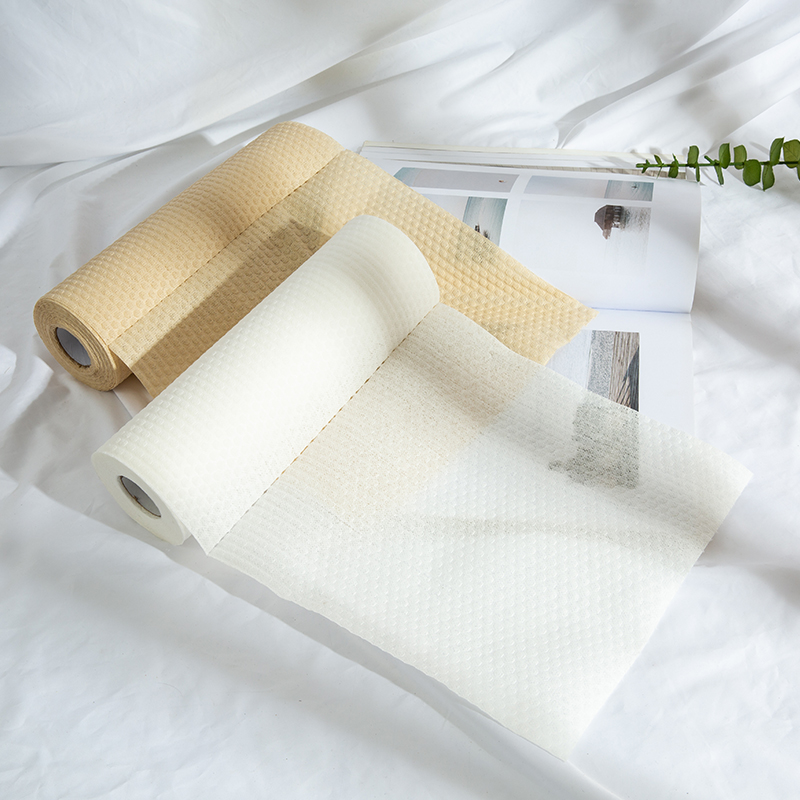
Most kitchen paper is produced through the through-air drying (TAD) or conventional wet-pressed process, both of which begin with a slurry of cellulose pulp — sourced from virgin wood fiber, recycled paper, or a blend of both — dispersed in water and laid onto a forming wire.
In the TAD process, the wet sheet is dried by passing hot air through it rather than pressing it between rollers. This preserves the fiber structure in a more open, lofty configuration, producing a sheet that is softer and more absorbent than conventionally pressed paper. TAD paper is used in premium kitchen roll brands and most commercial food service wipers.
Conventional wet-pressing is more energy-efficient and produces a thinner, denser sheet. These products are common in value-tier household rolls and industrial tissue. They absorb liquid adequately but have less bulk capacity per sheet than TAD alternatives.
Texture is added through embossing — mechanical patterning that increases the surface area contacting a spill and traps liquid within the raised structure. Two-ply constructions bond two embossed sheets together (either face-to-face or nested), roughly doubling absorbency and wet strength without proportionally increasing thickness.
Not all kitchen paper is the same. Products vary significantly by ply, sheet size, fiber source, and intended use — and choosing the wrong type for a task wastes product and money.
| Type | Ply | Best For | Typical Setting |
|---|---|---|---|
| Household roll | 2-ply | Everyday spills, food prep, surface wiping | Home kitchen |
| Centrefeed roll | 1–2 ply | High-volume wiping, grease absorption | Commercial kitchen, food processing |
| Z-fold / interfolded wiper | 1–2 ply | Controlled dispensing, hygiene-critical tasks | Catering, healthcare, janitorial |
| Premium 3-ply roll | 3-ply | Low-lint surface drying, delicate cleaning | Home, hospitality, barista stations |
Selecting kitchen paper comes down to three practical factors: absorbency requirement, hygiene standard, and cost per use — not just the price per roll. A cheaper roll with lower sheet count and lower absorbency can cost more per task than a premium product that handles the same job in one sheet.
A standard 2-ply virgin fiber household roll covers the full range of domestic kitchen tasks — wiping surfaces, draining fried food, cleaning up liquid spills, and patting dry meat and vegetables before cooking. Look for rolls with a sheet count of at least 100 per roll and an embossed surface; these perform more reliably across tasks than budget alternatives that saturate quickly and tear when wet.
If reducing plastic and packaging waste is a priority, look for rolls with recycled or FSC-certified fiber and minimal plastic wrapping. Bamboo-based kitchen paper has grown in availability and offers comparable absorbency to wood pulp with a faster-growing raw material source.
Commercial kitchens should prioritize centrefeed rolls or Z-fold dispensers over household rolls for operational and hygiene reasons. Centrefeed systems reduce direct hand contact with the roll, extend roll life, and integrate with lockable dispensers that prevent product waste. In environments regulated under HACCP or equivalent food safety frameworks, blue-colored kitchen paper is widely used — the non-natural color makes it immediately visible if a fragment is left in food, simplifying contamination detection.
For grease-heavy environments such as fryers, grill stations, and meat processing lines, choose wipers rated for high wet strength — these maintain integrity when saturated with hot oil or water and do not disintegrate mid-task, which reduces risk of contamination and surface damage.
Roll sheet count is a common metric but an incomplete one. A roll advertised as "100 sheets" may have sheets measuring 230 mm × 230 mm, while a competing roll offers 70 sheets at 280 mm × 280 mm — the latter providing roughly 40% more usable area per roll despite the lower sheet count. Always compare on the basis of total square meters of paper per roll when evaluating cost efficiency.
Kitchen paper is a versatile food prep tool beyond simple spill cleanup. Common culinary applications include:
One important limitation: kitchen paper should not be used in direct contact with high-temperature surfaces such as open flames or oven elements. Standard kitchen paper ignites at approximately 233°C (451°F). For lining baking trays or wrapping items going into the oven, purpose-made baking parchment — which is silicone-coated and rated for temperatures up to 230°C — is the correct choice.
Kitchen paper is single-use by design, which makes it a significant contributor to household and commercial waste streams. In the United States alone, paper towels account for approximately 3,000 tons of landfill waste per day. Sustainable purchasing decisions can meaningfully reduce this impact without compromising functionality.
Key certifications to look for on packaging include:
Used kitchen paper that has only contacted food scraps, fruit, vegetables, or unbleached materials is generally compostable in home or industrial compost systems. Paper soiled with meat, oils, or cleaning chemicals should go to general waste to avoid contaminating compost batches.
For businesses aiming to reduce paper towel consumption, touchless dispensing systems that release one sheet per activation have been shown to cut usage by 20–40% compared to open-roll formats where users take multiple sheets at once.



 English
 日本語
日本語 русский
 Español
 عربى
عربى