
Our team is proud to offer on time guarantee and product guarantee to customer satisfaction.
Read MoreSelecting the right manufacturer is the single most important decision when launching or scaling a wet wipes brand. The lowest unit price rarely delivers the best business outcome; instead, the decision should hinge on a manufacturer's production line flexibility, ingredient formulation expertise, packaging capabilities, and documented adherence to wet wipes quality standards. For businesses evaluating wet wipes OEM production, the goal is to identify a partner whose technical strengths align with your target product category—whether that is a high-speed line for baby wipes or a small-batch filling line for industrial disinfectant wipes. The following sections break down the evaluation criteria that separate a reliable, scalable supplier from one that will generate compliance issues and inconsistent product.
Content
A clear product brief dramatically shortens the search for a custom wet wipes manufacturing partner. Different wet wipes categories require different substrate and liquid handling capabilities. A production line set up for spunlace baby wipes with a 3.5x water-based lotion cannot efficiently switch to thick industrial wipes saturated with solvents. Before sending a single inquiry, determine these specifications:
With these parameters locked in, you can immediately filter out manufacturers whose production lines or regulatory registrations don't match. A supplier specializing in private label wet wipes for personal care will likely struggle with a medical-grade product that demands ISO 13485 certification and a validated sterilization process.
Understanding the wet wipes manufacturing process gives you the vocabulary to ask the right technical questions during a factory audit. The core sequence involves unwinding the nonwoven roll, folding the web into the desired configuration, saturating it with the liquid formula, cutting the continuous web into individual wipes or stacks, and then packaging. Within this sequence, specific machine choices directly affect product quality.
Folding technology is one critical variable. A wet wipes production line using Z-fold, C-fold, or rolled perforation will produce wipes with different dispensing behavior. For example, pop-up canister wipes require a precise Z-fold stack that reliably feeds the next sheet through the dispensing orifice; inconsistent folding leads to consumer frustration and returns. The saturation method—whether immersion, spray, or injection—determines lotion uniformity across the stack. Look for lines with gravimetric or flow-meter-based dosing controls that maintain lotion pick-up within a ±3% tolerance. Finally, confirm the production speed that can be sustained without sacrificing seal integrity: a modern flow-pack line typically runs at 60–120 packs per minute, but speed specifications should always be verified during a live production run of your specific product.
Wet wipes ingredients selection extends beyond the liquid formula to the substrate chemistry, preservative system, and packaging material compatibility. A qualified OEM partner maintains an in-house or closely partnered formulation lab capable of adjusting preservative efficacy, pH, and sensorial properties based on your market's regulations and consumer preferences. Request full raw material traceability documentation: every surfactant, emollient, and preservative should be traceable to its batch of origin, with certificates of analysis confirming purity and absence of restricted substances such as MIT (methylisothiazolinone) above regulatory thresholds for leave-on skin products.
For the substrate, the manufacturer should provide technical data sheets listing tensile strength (both wet and dry), absorbency rate, and fiber composition percentages. If you are developing a product with biodegradability claims, ask to see third-party test results against ASTM D6400 or ISO 14855 standards for the complete finished wipe—not just the substrate. Many biodegradability claims fail because the liquid formulation or the binder in the nonwoven does not break down at the same rate as the natural fibers. A responsible manufacturer proactively flags these interactions rather than leaving you to discover them through a failed certification audit.
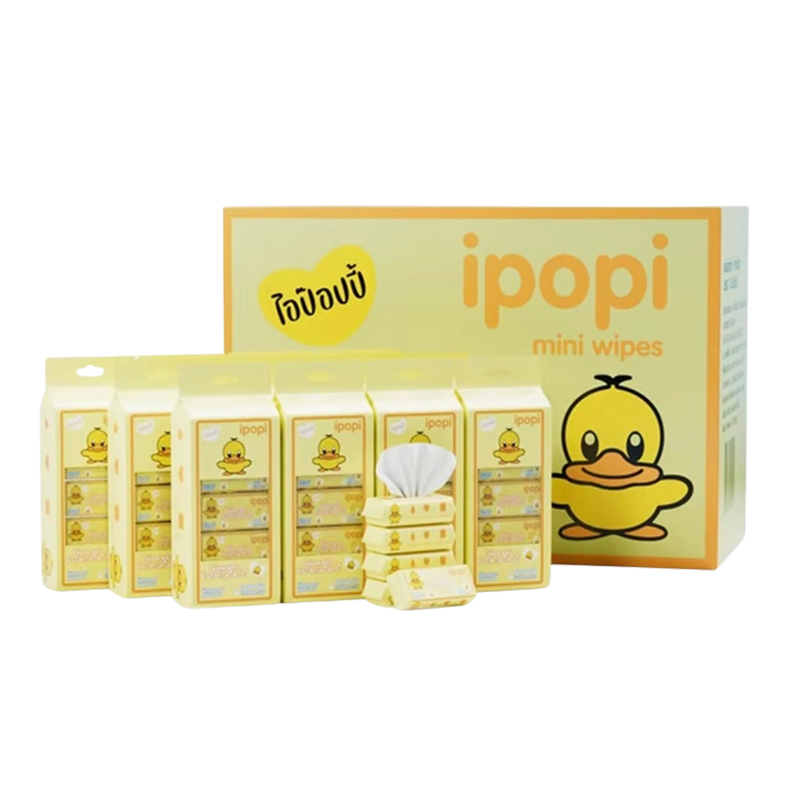
Wet wipes packaging options determine shelf life, consumer convenience, and shipping costs. Each format demands specific packaging machinery, so confirm that your manufacturer operates these lines in-house rather than outsourcing to a subcontractor, which adds lead time and quality risk.
| Packaging Format | Typical Wipe Count | Key Advantage | Considerations |
|---|---|---|---|
| Flow pack with resealable label | 40–120 | Low packaging cost, lightweight shipping | Label adhesive must survive repeated opening without losing seal |
| Rigid canister with flip-top lid | 60–100 | Excellent moisture retention, premium shelf presence | Higher per-unit cost and shipping volume; requires injection-molded lid supply |
| Soft refill pack | 60–200 | Reduces plastic use, ideal for refill business model | Must be paired with a reusable container; lower barrier to moisture loss |
| Single sachet | 1–10 | Hygiene-critical applications, travel-sized, portion control | Highest packaging cost per wipe; requires sachet form-fill-seal equipment |
| Bulk roll / tub | 200–1,000+ | Lowest cost per wipe for industrial and healthcare settings | Dispensing requires a separate wall-mounted or floor-standing dispenser |
Beyond the format, specify the packaging film structure. A typical flow-pack uses a multi-layer laminate such as PET/AL/PE or PET/VMPET/PE to provide a moisture and oxygen barrier. The required barrier level depends on the liquid formulation; alcohol-based wipes need a film with exceptionally low vapor transmission to prevent the package from drying out over a 24-month shelf life. Ask the manufacturer to provide accelerated aging test data at 40°C/75% RH that correlates to the claimed shelf life for your specific pack format.
Verifiable wet wipes quality standards are non-negotiable. Rather than accepting a manufacturer's claim of “high quality,” request copies of current certifications and cross-reference their scope to confirm it covers the product category you intend to produce. The following standards form the foundation of a robust quality system for wet wipes manufacturing:
Also ask about the manufacturer's internal defect rate target. A well-run wet wipes production line should maintain a defect rate below 1% for critical defects (open seals, missing lotion, count errors) and have an inline vision or check-weighing system to catch these before shipment.
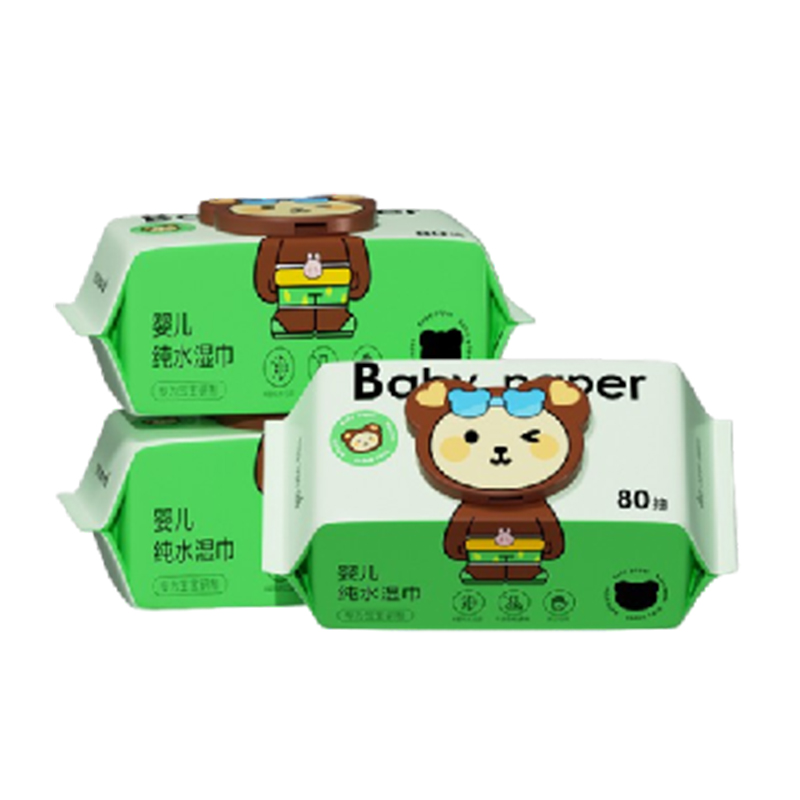
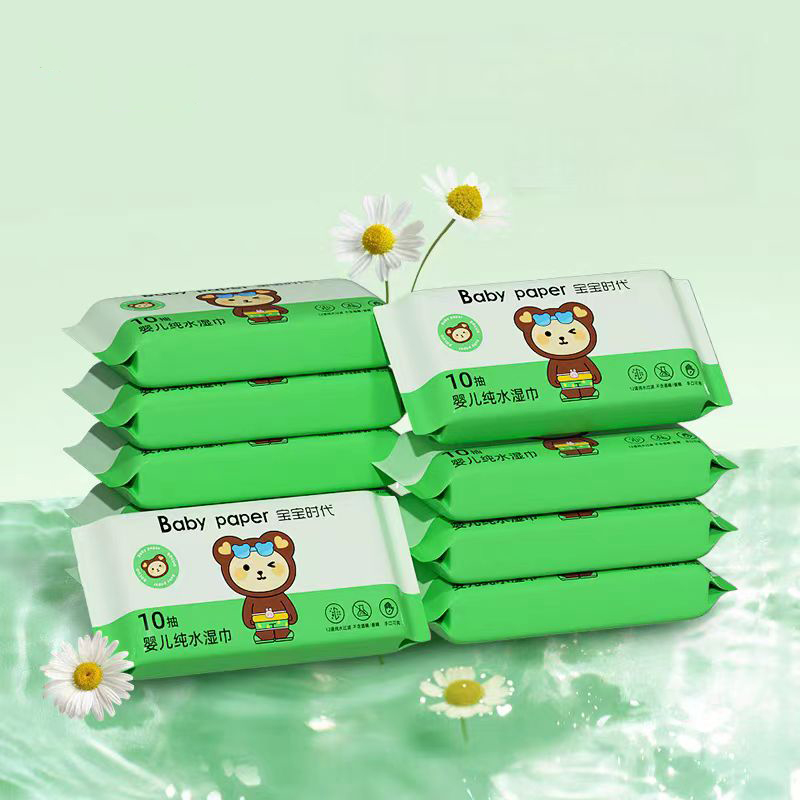
The spectrum between private label wet wipes and fully custom wet wipes manufacturing represents different levels of investment, time to market, and product control. Private label programs start from an existing library of formulations and packaging formats. You select a standard substrate, a pre-qualified liquid formula, and an approved pack design, then apply your branding. Minimum order quantities (MOQs) for private label can be as low as 10,000–30,000 packs, and lead times are typically 4–8 weeks from artwork approval. This model works well for brands entering the market quickly or testing a new category without committing to tooling costs.
Full custom manufacturing involves developing a unique formula, a nonwoven construction, or a proprietary pack structure from scratch. You will pay for R&D time, preservative efficacy testing, compatibility stability studies, and potentially new packaging molds or folding rails. MOQs are higher—often 100,000 packs or more—and the development timeline extends to 4–6 months before the first production run. However, the resulting product is exclusively yours, with performance attributes and branding elements that competitors cannot easily replicate. When evaluating wet wipes OEM production partners, ask to see case studies of both private label and custom projects to gauge their depth in each mode. An example of a manufacturer actively supporting this dual model is Jingde County Wanfang Articles Commodity Co., Ltd., whose broad equipment portfolio spans high-speed spunlace lines and specialized packaging formats suitable for both entry-level private label and fully bespoke product development.
Once the product specification is finalized, the factors to consider when ordering wet wipes shift to supply chain reliability and total landed cost. These operational details directly impact your inventory turns and cash flow:
Treating a wet wipes supplier as a long-term manufacturing partner rather than a transactional vendor yields compounding benefits. Once a production line is dialed into your substrate, lotion, and packaging combination, quality variability drops and production efficiency rises. The investment in a thorough, technically grounded evaluation process—applied across ingredients, packaging, quality systems, and supply chain terms—directly translates into a product that reaches the market on specification, on time, and with the margins you planned.



 English
 日本語
日本語 русский
 Español
 عربى
عربى