
Our team is proud to offer on time guarantee and product guarantee to customer satisfaction.
Read MoreWhen a purchasing manager opens a tissue paper specification sheet, the category rarely appears as a single item. The form breaks it into facial tissues, toilet paper, kitchen towels, napkins, and speciality products, each with its own ply count, sheet size, fiber source, packaging format, and price per unit. The differences are not cosmetic. They decide cost per sheet, customer satisfaction, and whether the product actually performs its job.
Jingde County Wanfang Articles Commodity Co., Ltd (Wanfang Paper) manufactures this full spectrum, from family-use boxed facial tissue to commercial-grade jumbo rolls and flushable toilet paper. Knowing the major types of tissue paper is the first step toward choosing a specification that fits the application, the budget, and the audience.
Content
Tissue paper in the household and commercial supply chain falls into six primary categories: facial tissue, toilet paper, kitchen paper towels, hand towels, napkins, and specialty tissue products.
The classification is not just about the product name. Each type has a distinct set of performance requirements.
Facial tissue is defined by ply count, sheet size, and surface treatment, in that order.
A 3-ply virgin pulp facial tissue with 100 sheets per box at 200 x 175mm is the retail standard. It gives roughly 300 layers of usable area, enough softness for daily use, and enough strength to keep its shape in the box. Two-ply products are cheaper but less comfortable. Four-ply products feel plush but raise the price per sheet.
Sheet size is a careful balancing act. A 200 x 175mm facial tissue serves most adult users well. A smaller 175 x 136mm format can feel cramped and require an extra pull. Some manufacturers offer compact formats that fit into tight packaging without reducing the sheet count.
| Feature | 2-Ply | 3-Ply | 4-Ply |
| Typical sheet size | 185 x 155mm | 200 x 175mm | 175 x 136mm |
| Softness | Moderate | High | Very high |
| Strength | Lower | Good | Excellent |
| Common use | Budget packs | Retail standard | Premium or cream |
| Cost per sheet | Low | Medium | High |
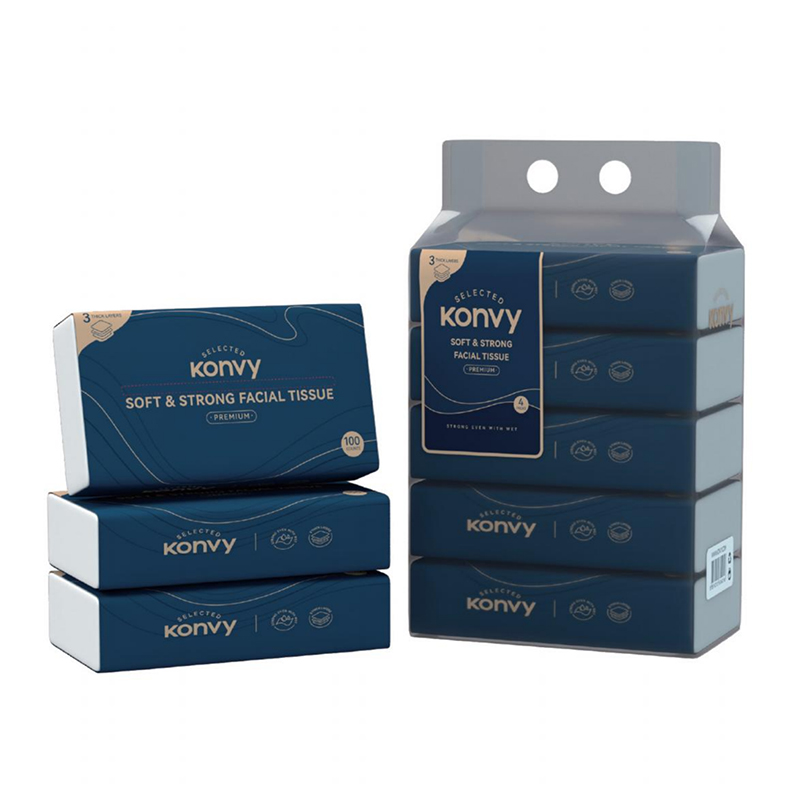 3-Ply Virgin Pulp Facial Tissue 100 Sheets 200x175mmWith a balanced sheet size and medium count, this 3-ply facial tissue is a practical choice for daily use, offering softness and strength for household or office needs.View Product →
Toilet paper is the highest-volume tissue category, and the biggest variable is roll format.
Residential users buy small rolls, often 2-ply or 3-ply, that fit standard fixtures. Commercial facilities use jumbo rolls that last longer and reduce maintenance. In either case, flushability is the critical functional requirement.
Jumbo rolls commonly run 250m in length on a 90-230mm core, while small residential rolls are usually 150-200 sheets and around 100-120mm wide. The weight of a single ply in toilet paper ranges from 13 to 15 gsm, so a 3-ply sheet has a total basis weight near 42 gsm. Embossing plays an outsized role in quality. Embossed patterns increase surface area and absorbency, but they also reduce sheet strength. A 5-ply textured toilet paper can feel substantial while still flushing cleanly. For a deeper look at how ply and embossing interact in real production settings, this article explains the trade-offs mills face.
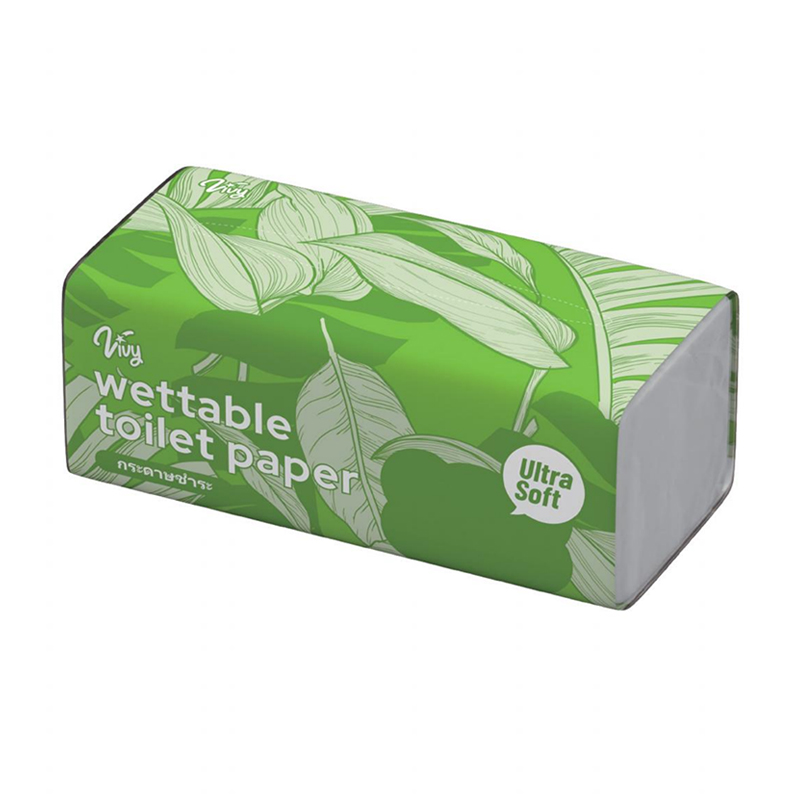 5-Ply Flushable Wet-Strength Toilet Paper 100 SheetsThis 5-ply toilet paper provides a thicker, wet-wipe-like experience while remaining flushable, making it a premium option for those seeking extra comfort and durability.View Product →
Kitchen paper towels are engineered for liquid pickup, not skin comfort.
Unlike facial tissue, which must be gentle on the face, kitchen towels need to handle oil, water, food residue, and repeated scrubbing. The structure is usually a through-air-dried (TAD) web or a similar high-porosity material that creates open channels for liquid absorption. Household kitchen paper towels typically weigh 32-38 gsm for one ply. A 2-ply kitchen towel therefore reaches 64-76 gsm, which is significantly heavier than facial tissue. This higher basis weight is what allows the sheet to hold liquid without falling apart.
The kitchen towel leads with roughly 85% absorbency, followed by commercially oriented hand towels at 68%, toilet paper at 56%, facial tissue at 42%, and napkins at 33%. These numbers come from standard liquid-holding-capacity tests used in the tissue industry.
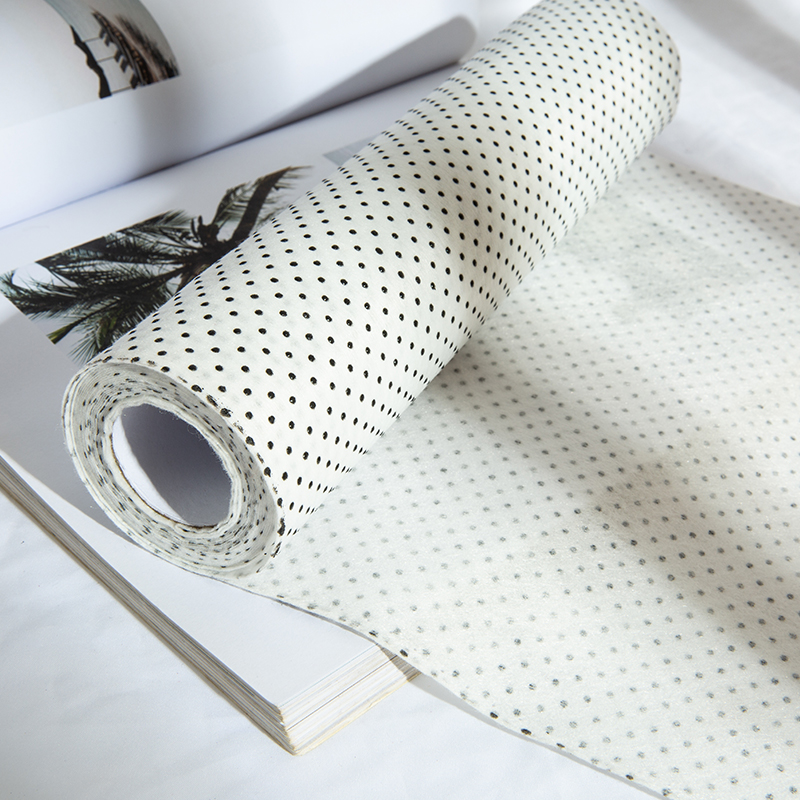 Multi-Layer Absorbent Kitchen Paper Roll for Oil and WaterEngineered for high absorbency and wet strength, this multi-layer kitchen roll handles spills and grease effectively, making it a reliable cleaning tool for busy kitchens.View Product →
Beyond the core four, specialty tissue products solve specific problems: cream-infused tissues for sensitive skin, printed napkins for restaurant tables, and pocket tissues for handbags.
Cream-infused tissue is the fastest-growing specialty segment. The formula adds a moisturizing layer that changes the hand feel, but it also affects manufacturing. The lotion can interfere with web formation and must be applied carefully after the tissue is formed. Printed handkerchief paper uses digital or flexographic printing on the outer sheet, and the ink must be water-based and food-contact safe.
The right tissue paper type for a business is the one that matches the application, budget, and audience expectations.
Start by listing every place tissue is used: restrooms, dining areas, kitchens, guest rooms, or retail shelves. Then match the product to the traffic level. A busy restaurant might need jumbo toilet paper, 2-ply napkins, and heavy kitchen towels. A family-oriented retail shelf needs 3-ply box facial tissue and soft-pack options. Hotel buyers should also consider emission standards, since a low-odor, fragrance-free tissue is preferred in guest rooms, while kitchen operations may prioritize an oil-absorbing towel.
| Application | Recommended Type | Key Specification | Why |
| Office restrooms | Jumbo toilet paper | 2-3 ply, 250m | Low maintenance |
| Restaurant dining | 2-ply napkins | 270 x 270mm, embossed | Professional table look |
| Family living areas | 3-ply box facial tissue | 200 x 175mm | Softness and value |
| Commercial kitchens | Heavy kitchen towel | High absorbency | Fast liquid cleanup |
| Sensitive skin care | Cream-infused tissue | 3-ply plus lotion | Reduced friction |
When volume is large, compare cost per sheet rather than cost per pack. A small difference in sheet size can shift annual spending by 10-15%. Buyers who understand the underlying material facts can evaluate supplier claims with confidence.
These are the questions most buyers ask when selecting tissue paper.
Tissue paper is the broad category. Toilet paper is one type designed for bathroom use, with quick-dissolving properties to avoid clogging. Facial tissue, kitchen towels, and napkins are also types of tissue paper, but they optimize for different performance criteria.
Most tissue paper comes in 1-ply to 5-ply configurations. Facial tissue is typically 2-3 ply, toilet paper is 2-3 ply, and specialty products can reach 4-5 ply. Higher ply counts increase softness and strength but also raise the cost per sheet.
Kitchen paper towels are built for durability and liquid pickup, using a through-air-dried structure or similar high-porosity technology. Facial tissue is optimized for skin comfort and softness, not scrubbing or water absorption.
Virgin wood pulp, recycled fiber, bamboo fiber, and mixed fiber are the main materials. Virgin wood pulp delivers the highest softness and strength. Recycled fiber is more economical but requires careful processing. Bamboo fiber is often chosen for sustainability positioning. Wanfang Paper produces tissue products across these materials.



 English
 日本語
日本語 русский
 Español
 عربى
عربى