
Our team is proud to offer on time guarantee and product guarantee to customer satisfaction.
Read MoreKitchen paper is more than just a roll of disposable sheets — it is a hygienic, absorbent, and multi‑purpose tool that handles everything from cleaning spills to preparing food. Whether called kitchen paper towels, paper towels, or simply kitchen roll, this everyday essential has evolved into a material engineered for strength, rapid liquid pickup, and safe food contact. Understanding what is kitchen paper and how to use it effectively can change the way you manage mess, cook with confidence, and keep your home clean.
Content
At its simplest, kitchen paper is an absorbent disposable sheet made primarily from wood pulp. Most household rolls use either virgin pulp for softness and strength or a blend with recycled fibers. The paper is formed on a fine screen, dried, and then embossed — the raised pattern creates tiny air pockets that dramatically boost its ability to trap liquid. This structure is why a single sheet of a good absorbent kitchen paper towel can hold 8 to 12 times its own weight in water, far outperforming a standard napkin or cloth.
Manufacturers typically offer kitchen paper in 1‑ply, 2‑ply, or even 3‑ply versions. While 1‑ply sheets are lightweight and economical, 2‑ply combines two layers bonded together, often with a quilted pattern, to deliver up to 40% more absorbency and significantly higher wet strength. This layered construction is what makes a strong kitchen paper towel capable of scrubbing a greasy stovetop without disintegrating. The best sheets also feature a quick‑absorbing emboss that wicks moisture the instant it touches a spill, so you can clean up with fewer sheets.
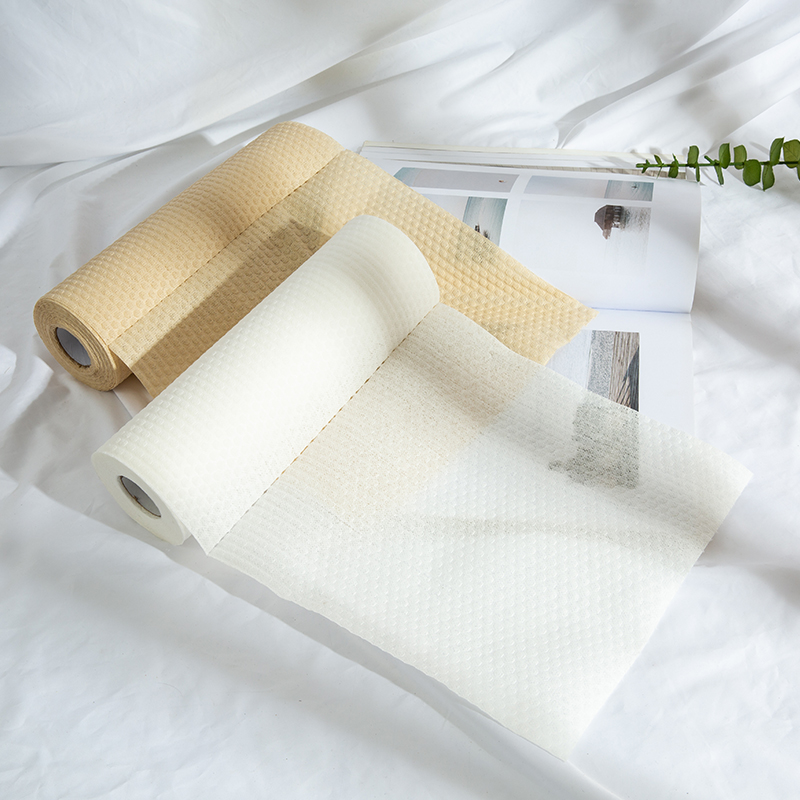
The list of kitchen paper uses extends far beyond wiping counters. A single roll can replace a dozen specialized cloths and tools, simplifying chores from the kitchen to the bathroom and even the garage. Here are the most practical uses of kitchen paper towels that prove its versatility:
These kitchen paper uses highlight one fundamental truth: the right paper towel does the work of multiple cleaning tools while being disposable, eliminating the need to rinse and launder contaminated cloths. For any task where hygiene and speed matter, reaching for a quality kitchen paper towel is often the most efficient choice.
When choosing a kitchen paper towel for cleaning, two properties dominate: absorbency and wet strength. Absorbency is measured by how much liquid a sheet can hold relative to its weight, as well as how quickly it pulls in moisture. A strong kitchen paper towel, on the other hand, must maintain its shape when scrubbing and not tear the moment it becomes saturated. These performance characteristics are not just marketing claims — they can be quantified.
| Paper Type | Ply | Liquid Absorption (g/g) | Wet Tensile Strength | Best Cleaning Task |
|---|---|---|---|---|
| Economy 1‑ply | 1 | 4–6 g/g | Low — disintegrates quickly | Light dusting, small water drops |
| Premium 2‑ply | 2 | 8–12 g/g | High — holds shape when wet | Spills, scrubbing, countertop cleaning |
| Extra‑strong 3‑ply | 3 | 10–14 g/g | Very high — resists tearing even under friction | Heavy grease removal, tough scrubbing |
An absorbent kitchen paper towel acts like a pump. The embossed channels create capillary action that draws liquid into the sheet almost on contact, while the multi‑layer structure traps it inside. This is why you can wipe a puddle of milk with a 2‑ply towel and the surface remains dry with one pass. In contrast, a weaker towel leaves a film of moisture behind, requiring multiple sheets and doubling waste. For tasks like cleaning windows or polishing faucets, the strong kitchen paper towel also releases fewer lint fibers, keeping surfaces visibly cleaner.
Using a kitchen paper towel for cooking is a standard practice in professional kitchens and home cooking alike, but it demands a product that is explicitly safe for food contact. Food grade kitchen paper means the sheets are free from fluorescent whitening agents, heavy metals, and harmful dyes. Always check for a statement confirming compliance with food safety standards before letting paper come into prolonged contact with edibles.
Here are the most useful cooking applications of kitchen paper:
A strong kitchen paper towel is particularly important when handling heavy, wet ingredients. Inferior sheets can fall apart when blotting a large roast, leaving paper fragments stuck to the surface. This is both frustrating and a potential food quality issue, making the case for premium, food‑safe products all the more persuasive.
The kitchen paper towel benefits extend far beyond simple convenience. When compared to reusable cloths and sponges that harbor bacteria, disposable paper offers a measurable advantage in household hygiene. A landmark study found that kitchen sponges can host up to 54 billion bacterial cells per cubic centimeter, while a fresh sheet of kitchen paper is sterile until opened. By using paper for raw meat cleanup and discarding it immediately, you break the chain of cross‑contamination that causes foodborne illness.
Efficiency is another critical benefit. Because an absorbent kitchen paper towel picks up spills in a single pass, cleaning time drops significantly. A family kitchen that deals with frequent drink spills, pet messes, and cooking splatters can save roughly 20–30 minutes a day by grabbing a strong, absorbent sheet instead of rinsing and wringing out a cloth multiple times. Over the course of a year, that’s more than 150 hours reclaimed for actual cooking and family time.
Storage and portability add to the practical value. A roll of kitchen paper sits neatly on a countertop holder, and a few folded sheets in a lunch bag handle spills on the go. For outdoor grilling, camping, or roadside picnics, having a strong kitchen paper towel on hand means you can clean up instantly without relying on access to water. This combination of sanitary single‑use cleaning, time savings, and versatility is what makes a reliable roll of kitchen paper one of the most underrated tools in any home.



 English
 日本語
日本語 русский
 Español
 عربى
عربى