
Our team is proud to offer on time guarantee and product guarantee to customer satisfaction.
Read MorePeel a 3-ply facial tissue apart and you get three sheets of roughly 14 gsm each, bonded by embossing and fiber friction alone, with no adhesive anywhere in the ply bond. Everything that makes that sheet soft, strong or absorbent fits inside 14 grams per square meter, and the recipe behind it is narrower than most buyers expect.
Content
Tissue is made from cellulose fiber, water and a thin layer of functional chemistry: fiber accounts for 95% or more of the dry weight, water for 4-8% of the finished sheet, and additives for under 3%.
That fiber fraction is almost never a single pulp. Hardwood pulp from eucalyptus, birch or acacia gives fibers of 0.7-1.5 mm that pack into an even, closed surface, and surface evenness is what the hand reads as softness. Softwood pulp from pine, spruce or fir supplies tracheids of 2-4 mm that act as the load-bearing skeleton. A facial tissue furnish of 60-70% hardwood and 30-40% softwood is a routine starting point; push the softwood share up and tensile strength rises while softness falls.
| Material | Typical level | Role in the sheet |
| Cellulose fiber | 95-98% of dry mass | Web structure, absorbency, handfeel |
| Water | 4-8% of finished weight | Keeps the sheet flexible and static-free |
| Dry-strength agent | 0.5-1.5% | Raises tensile, cuts surface lint |
| Wet-strength resin | 0.5-2%, towel grades | Holds the sheet together when saturated |
| Softener or debonder | 0.2-1% | Lowers fiber-to-fiber friction |
| Lotion | 1-3%, facial grades | Surface smoothness and skin feel |
| Dye or brightener | Below 0.1% | Whiteness and shade control |
Wood pulp supplies the majority of global tissue furnish, and the choice between virgin and recycled pulp is a specification decision rather than a marketing one.
Northern bleached softwood kraft (NBSK) is the reference long-fiber grade, used at 20-40% of a furnish wherever wet strength or machine runnability matters. Bleached eucalyptus kraft does the opposite job: at 0.7-0.9 mm its fibers form a smoother sheet with fewer pinholes, which raises softness and opacity at the same grammage.
Recycled tissue runs on deinked pulp recovered from office paper and newsprint. Each loop shortens the fiber by 20-30%, and shorter fiber means lower tensile and higher ash, so a mill either accepts a weaker sheet or blends in 10-20% virgin softwood. The practical result is a serviceable 2-ply bathroom tissue and a facial tissue that needs extra calendering to feel smooth.
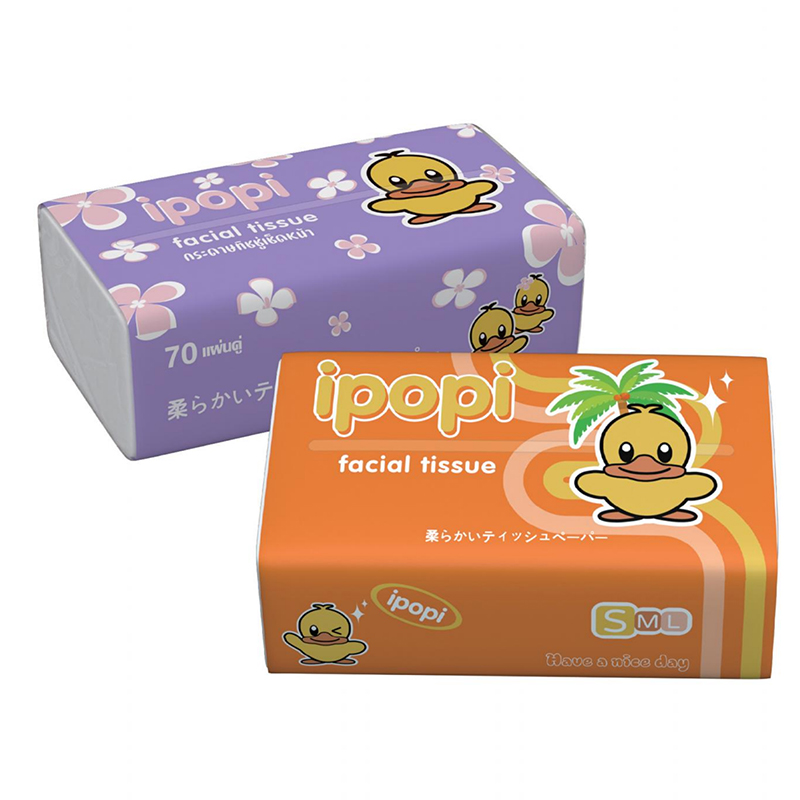 2-Ply Recycled Paper Facial Tissue, 70 SheetsA 2-ply recycled-paper facial tissue in 70-sheet packs, positioned as an eco-friendly daily option; the larger pack offers better value than the 50-sheet version.View Product →
Bamboo fiber measures 1.5-2.0 mm, sitting between hardwood and softwood, which is why bamboo tissue reads as crisp rather than silky. Bagasse and wheat straw behave the same way at 1.0-1.5 mm. Cotton linters, at 2-6 mm, are added in small amounts to soften premium facial grades.
Additives work at doses below 3% of dry fiber, and the most consequential one is wet-strength resin: at a 0.5-2% add-on, a kitchen towel keeps 25-40% of its dry tensile strength when saturated, where an untreated sheet retains under 10%.
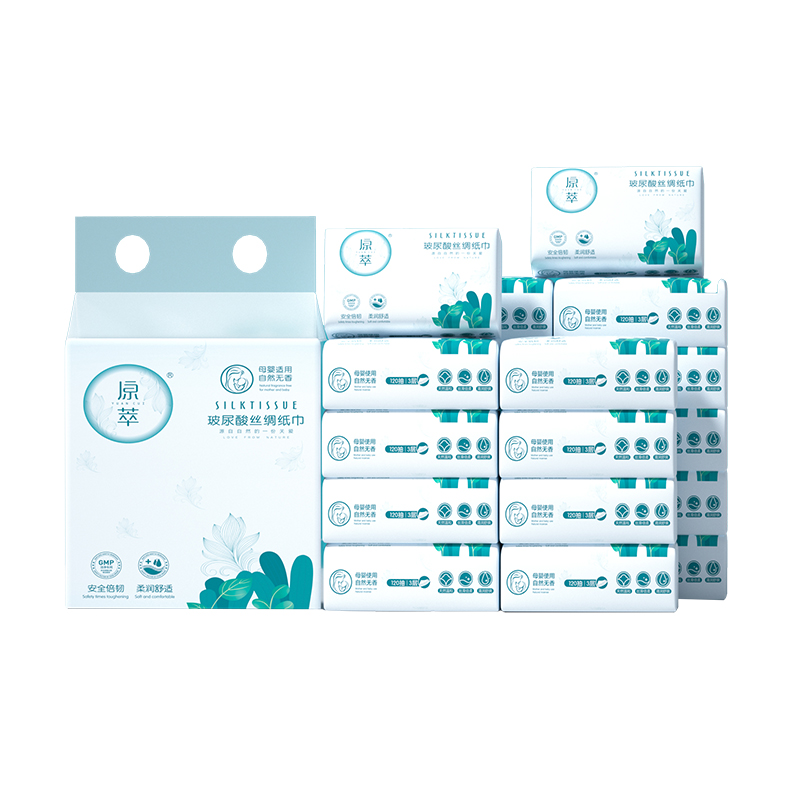 Natural Silky Soft 3-Ply Facial Tissue, 120 SheetsAn additive-free, natural-color 3-ply facial tissue in a 120-sheet pack, designed for gentle everyday wiping and small enough to carry for home or travel use.View Product →
A tissue machine takes a furnish from about 0.3% consistency at the headbox to 5-7% moisture at the reel, which means roughly 99.5% of what enters the machine is water that has to be drained, pressed or evaporated.
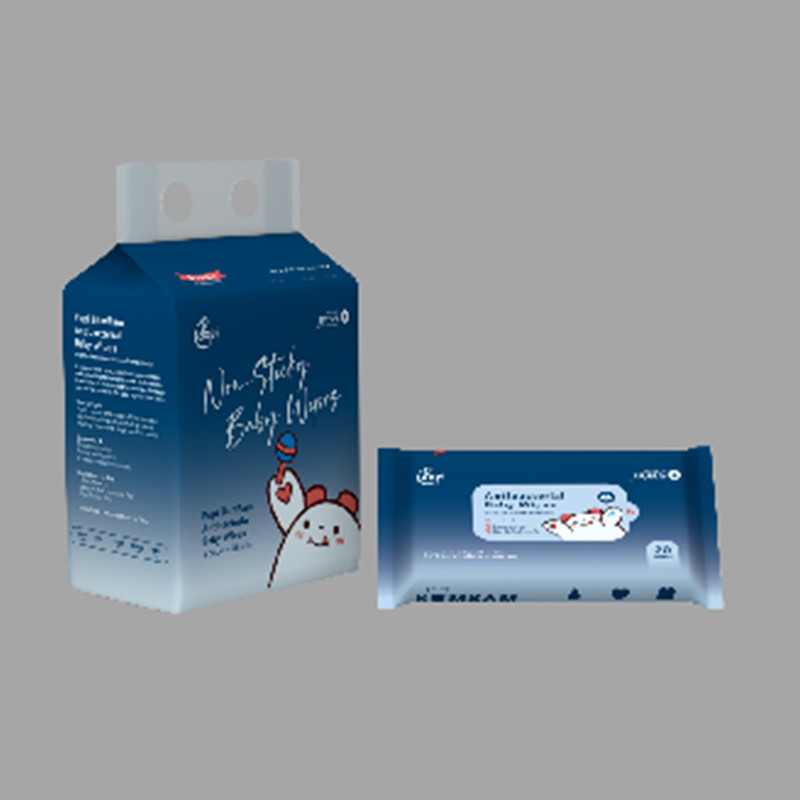
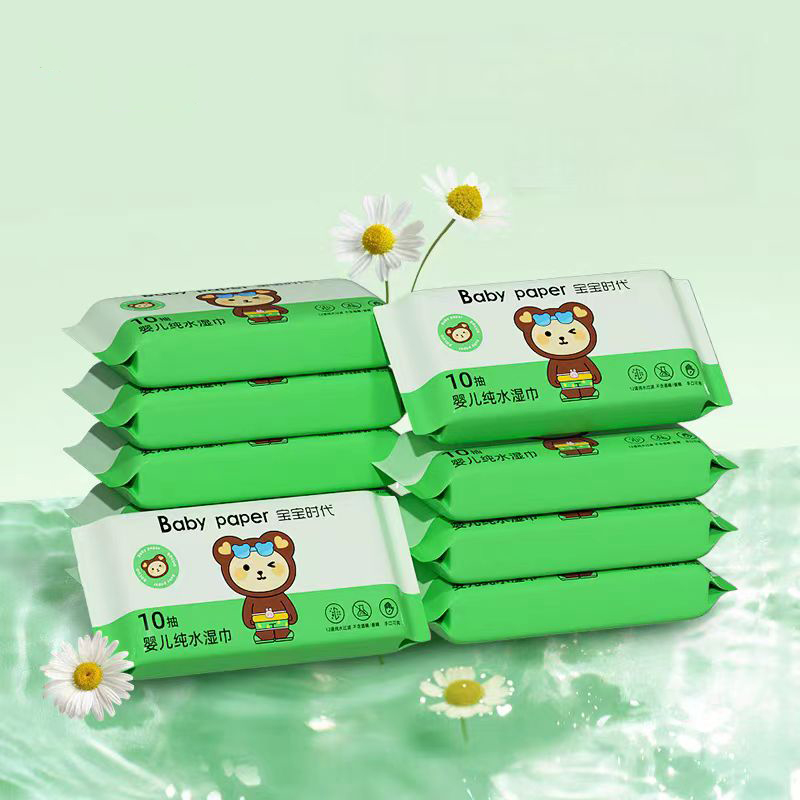
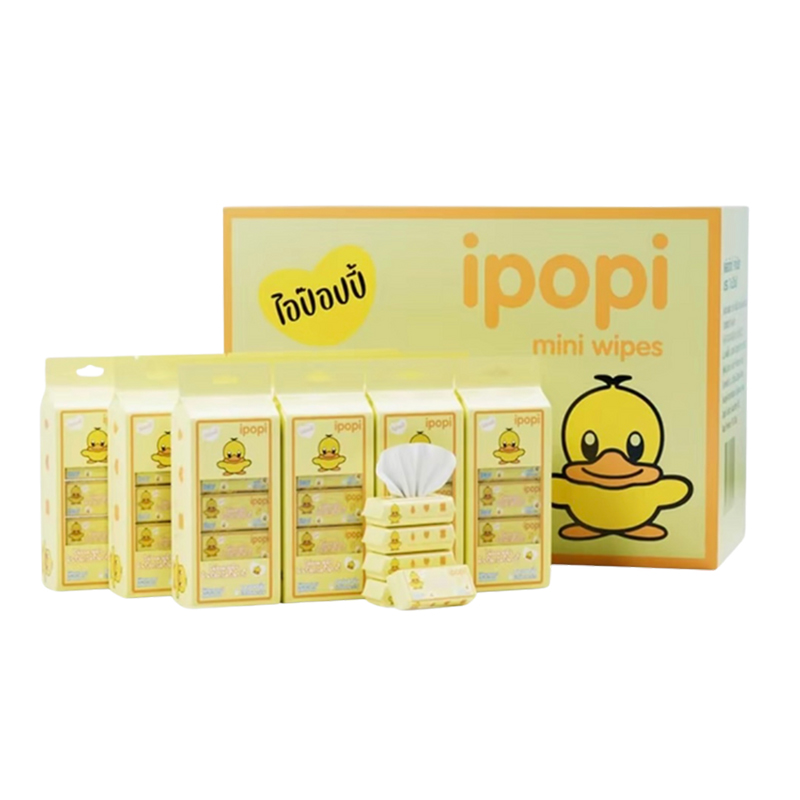
Wet wipes and disposable face towels contain no wood pulp at all: they are spunlace nonwovens, typically 50-70% viscose blended with 30-50% polyester, at 40-80 gsm.
Instead of draining a slurry, hydroentanglement drives high-pressure water jets, usually at 60-100 bar, through a carded fiber web to entangle it mechanically. No binder is needed, which is why a good wipe leaves less lint than a paper towel and still holds together when soaked. Viscose supplies absorbency and softness; polyester supplies the strength that stops the web tearing during dispensing.
Viscose is still cellulose, so a "plant fiber" face towel traces back to dissolving wood pulp; the difference is that the fiber is regenerated and continuous rather than a paper web. Wanfang Paper publishes a raw-material guide to baby wipes covering fiber blends, water quality and preservative systems.
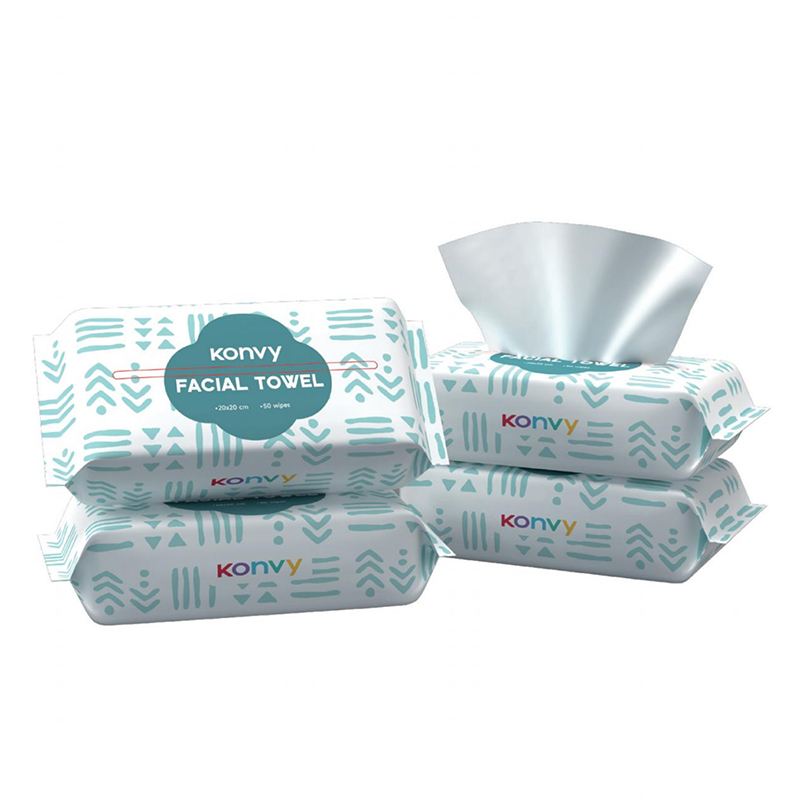 Plant Fiber Disposable Facial Towels, 50 SheetsSingle-ply 200×200 mm facial towels made from 100% plant fiber, offered as a soft alternative for makeup removal, facial cleansing and daily skincare.View Product →
Tissue figures are only comparable when they come from the same test standard and the same conditioning room: ISO 12625-4 tensile results are valid only after conditioning at 23 ± 1 °C and 50 ± 2% relative humidity.
Wanfang Paper lists ply, sheet count and sheet dimensions on every product page, so the grammage arithmetic can be checked before a sample is ordered; the full tissue range is organized by format rather than by brand claim.
Because the surface your skin touches is a single ply, not the whole sheet. A 3-ply build at 14 gsm per ply presents a 14 gsm surface, while a 2-ply build at 21 gsm presents a 21 gsm surface that must be calendered harder to feel smooth. The thinner outer ply bends more easily and the embossed pockets between plies add compressibility, which is what the hand registers as softness.
Yes, and 100% recycled facial tissue is a mainstream retail product in several European markets. The constraint is mechanical: deinked fiber is 20-30% shorter with higher ash, so a mill either adds 10-20% virgin softwood or raises dry-strength starch to hold tensile. Buyers should request the recycled content percentage and the wet tensile value rather than accepting the word recycled on its own.
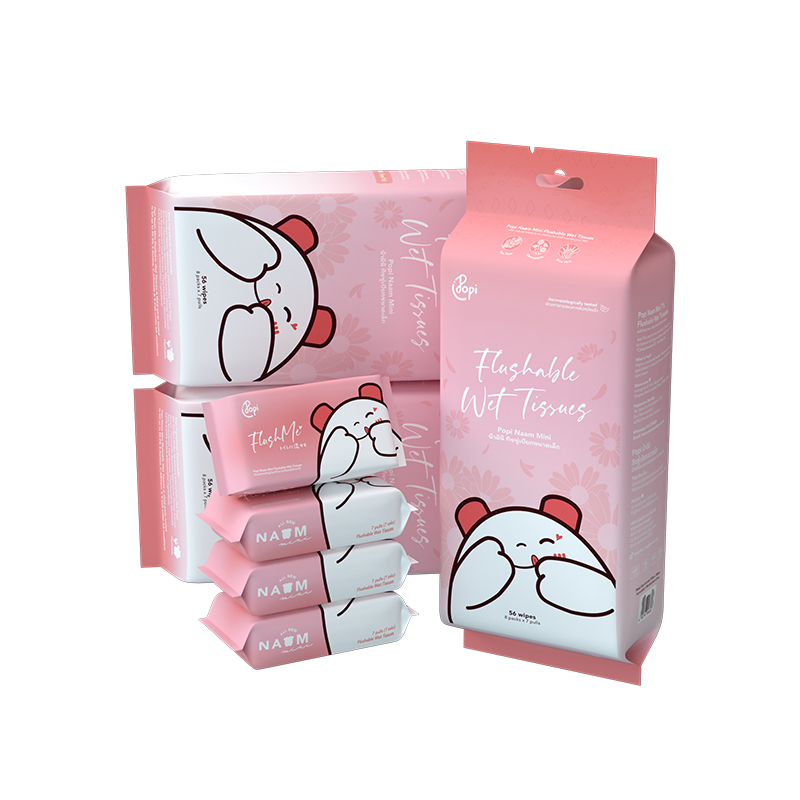
Disintegration, not thinness. A wipe has to pass the EDANA and INDA flushability assessment, which covers clearance through the toilet and drain line plus disintegration within a defined test window; products that fail carry a do-not-flush label. Short viscose fibers and a low-consolidation hydroentanglement pattern are what make that pass achievable at 40-80 gsm.



 English
 日本語
 русский
 Español
 عربى